Some of the links on NatCurious.com are affiliate links, which means we may earn a small commission if you choose to make a purchase—at no extra cost to you.
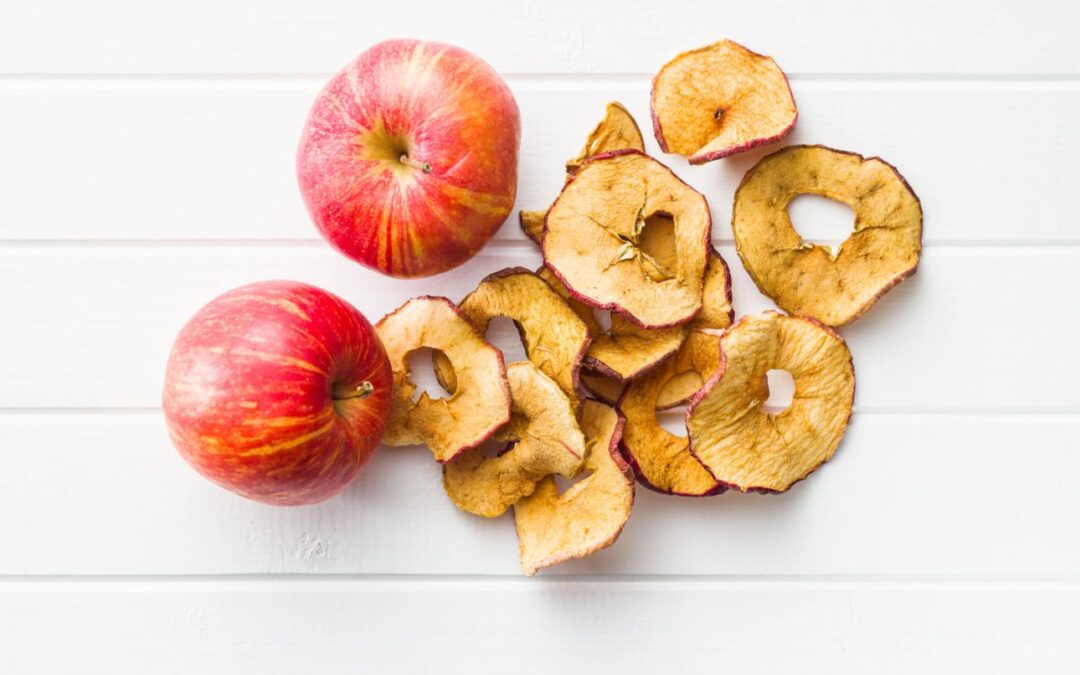
You’ve washed, sliced, and dehydrated your apples. They’re beautifully dried, naturally sweet, and ready to enjoy.
Now what?
One of the wonderful things about dehydrating food is that it allows us to preserve seasonal produce for months. But removing moisture is only half the process. How we store our finished food plays an equally important role in keeping it fresh and delicious.
Whether you’re preserving apples, vegetables, herbs, or other foods, a few simple storage habits can make a big difference.
Let’s explore how long dehydrated foods generally last, which containers work best, and how to recognize when something should be discarded.
Why Does Dehydrated Food Last Longer?
Fresh fruits and vegetables contain a significant amount of water. That moisture allows bacteria, yeasts, and molds to grow, eventually causing food to spoil.
Dehydrating removes enough moisture to make it much harder for these microorganisms to grow.
It also slows some of the natural chemical reactions that cause food to deteriorate.
But there’s an important distinction:
Dehydrating slows spoilage. It doesn’t sterilize food.
Dried foods can still deteriorate if they’re exposed to moisture, oxygen, excessive heat, or improper storage conditions.
That’s why drying your food thoroughly and storing it correctly go hand in hand.
How Long Do Dehydrated Apples Last?
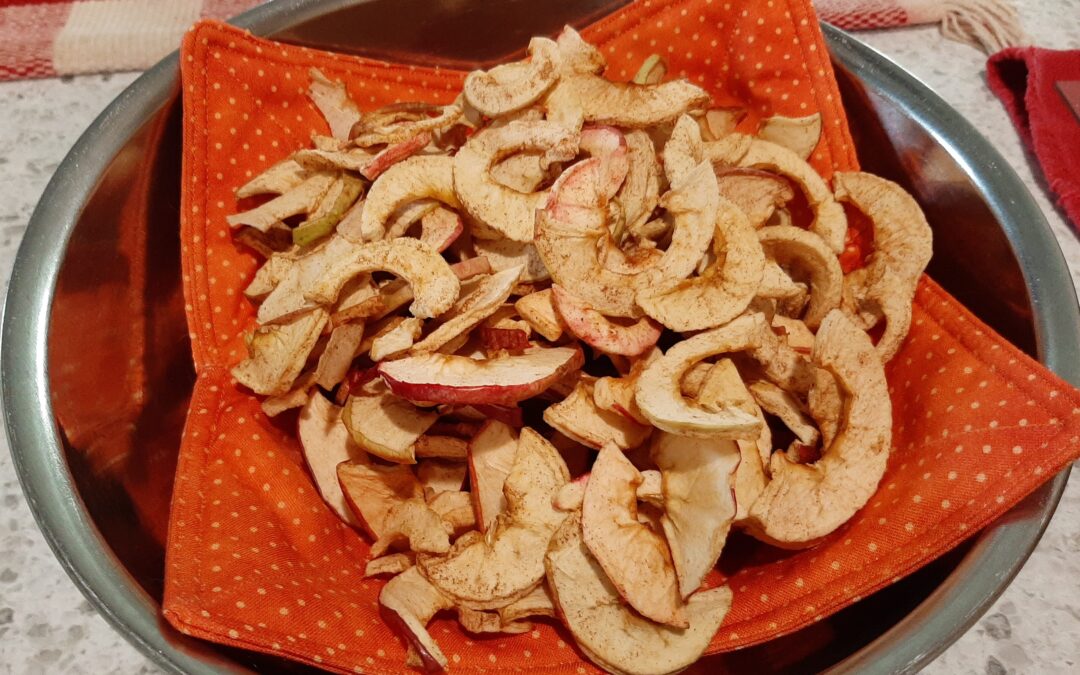
Properly dried and stored apples can generally maintain good quality for approximately 6–12 months, depending on storage conditions.
Temperature is particularly important.
According to the National Center for Home Food Preservation, dried foods generally have recommended storage times ranging from four months to one year.
Dried fruit stored at approximately 60°F may maintain acceptable quality for up to a year. At 80°F, that storage time can be reduced to around six months.
This makes a cool pantry, basement storage area, refrigerator, or freezer preferable to a warm kitchen cupboard.
Remember that these are general quality guidelines, not guaranteed expiration dates.
How Long Do Other Dehydrated Foods Last?
Different foods have different storage characteristics. Their original moisture content, fat content, preparation, drying method, and packaging all influence how long they remain in good condition.
Here’s a simple reference chart for home-preserved foods.
Dehydrated Food Storage Chart
Food
General Storage Guideline
Dried apples
6–12 months
Other dried fruits
6–12 months
Most dried vegetables
3–6 months
Dried herbs
About 1 year for best flavor
Homemade fruit leather
About 1 month at room temperature
Homemade jerky
Up to 2 weeks at room temperature when safely prepared
These are approximate planning guidelines for properly prepared foods, not universal safety deadlines.
For longer storage, refrigeration or freezing may help preserve quality.
A special note about jerky: Meat requires specific food-safety preparation and heating procedures before and during dehydration. Simply drying raw meat until it looks finished isn’t enough to ensure its safety.
Before You Store Your Apples, Try Conditioning!
Here’s a step that many overlook.
Even when your apple slices appear completely dry, some pieces may still contain slightly more moisture than others.
Conditioning helps distribute that remaining moisture evenly and allows you to check whether additional drying is needed.
How to Condition Dried Apples
Allow your dehydrated apples to cool completely.
Place them loosely in a clean, dry glass jar, filling it approximately two-thirds full.
Close the jar and let it stand for 7–10 days.
Shake the jar daily to separate the pieces and redistribute moisture.
Check carefully for condensation or moisture collecting inside.
If condensation appears, return the apples to the dehydrator for additional drying. If you discover mold, discard the affected food.
Once your apples have completed conditioning without signs of moisture, they’re ready for packaging and storage.
The Four Biggest Enemies of Dried Food
To keep dehydrated foods in good condition, protect them from four things:
1. Moisture
Moisture is the biggest concern. If dried food absorbs enough water from the surrounding environment, mold and other spoilage microorganisms may begin growing.
2. Oxygen
Exposure to oxygen can contribute to oxidation, affecting flavor, color, and certain sensitive nutrients.
3. Heat
Higher storage temperatures accelerate quality deterioration. Even properly dried food may lose flavor, color, and nutritional value more quickly in a warm environment.
4. Light
Prolonged exposure to light can contribute to color changes and the breakdown of certain food components.
The ideal storage location is cool, dry, dark, and protected from temperature fluctuations.
What Are the Best Containers for Dehydrated Food?
You don’t need an elaborate storage system to preserve your dried apples and vegetables.
The most important thing is choosing clean, dry, food-safe containers that protect against moisture.
Here are several useful options:
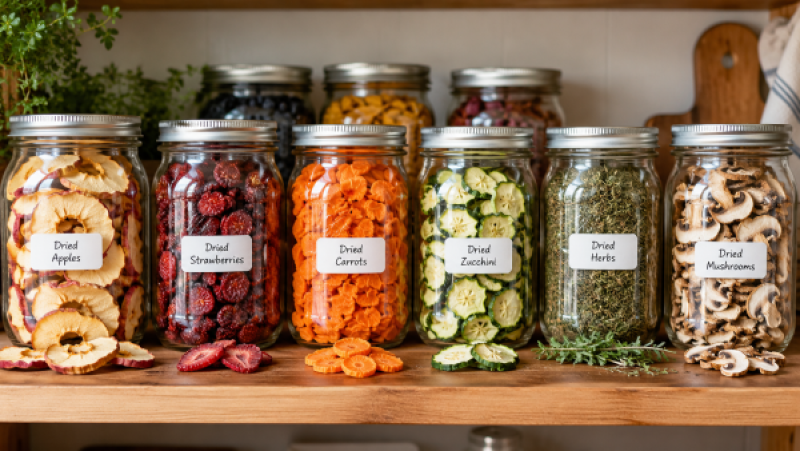
1. Airtight Glass Jars
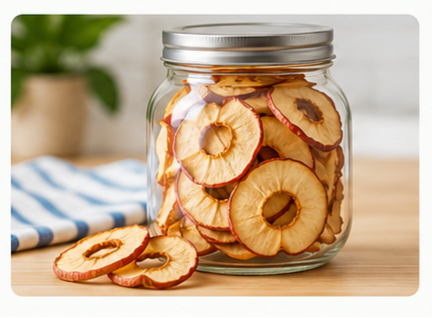
Glass canning jars with tight-fitting lids (Mason jars) are one of my favorite choices for everyday storage.
While they do take up more space than, say, a plastic bag, they’re reusable, easy to clean, and, like a plastic bag, allow you to see what’s inside.
They’re especially convenient for dried apples, herbs, and vegetables you plan to use regularly.
Keep clear jars in a dark cupboard to reduce light exposure.
2. Vacuum-Sealed Bags
Vacuum sealing removes much of the air surrounding your food, helping reduce exposure to oxygen.
This can help preserve flavor and quality, particularly when storing dried foods for longer periods.
However, vacuum sealing does not make moist or improperly dried food safe.
Always make sure your food is thoroughly dried and cooled before sealing.
3. Food-Grade Mylar Bags
Mylar bags provide protection against light and, when properly sealed, can provide a useful barrier against moisture and oxygen.
They’re particularly convenient for dividing large batches into smaller storage portions.
Oxygen absorbers may be suitable for appropriately dried, low-moisture foods, but should never be used to compensate for incomplete drying.
4. Freezer-Safe Containers
If you live in a warm or humid climate, freezing properly dried food can help maintain its quality for longer.
Before opening a frozen package, allow it to come to room temperature while still sealed. This helps reduce condensation on the food.
5. Freezer Bags
Freezer bags are perfectly fine for storing dehydrated foods, especially if you’re planning to use them within a few months.
In fact, heavy-duty, food-grade freezer bags are a practical, inexpensive option for home food preservation.
For longer storage, freezer bags can also be placed directly in the freezer. Use them instead of thinner plastic sandwich bags.
A Few Extra Tips for Better Dehydrated Apples
A few small habits can help protect all the work you’ve put into dehydrating your food.
Cool before packaging. Warm food can create condensation inside sealed containers.
Consider conditioning. Place cooled dehydrated food in an mason jar and shake daily for 7 days, looking for moisture. Return to the dehydrator for a bit to remove moisture.
Store smaller portions. Opening one small jar repeatedly is better than exposing an entire large batch to moisture and air.
Label everything. Include the food name and the date it was dehydrated.
Use older batches first. A simple first-in, first-out system helps prevent forgotten jars from sitting in the pantry.
Check your food periodically. Look for unexpected moisture, condensation, mold, or unusual changes.
A little organization goes a long way toward reducing food waste.
How Can You Tell If Dehydrated Food Has Gone Bad?
Even properly stored dried foods should be checked before eating.
Watch for:
Visible mold or fuzzy growth
Condensation inside the container
Unexpected moisture or dampness
Unusual or unpleasant odors
Evidence of insect activity
Unexpected changes in texture or appearance
Some darkening and gradual flavor changes can occur naturally during storage, but suspicious changes deserve your attention. If you discover mold, discard the affected batch rather than attempting to remove only the visibly moldy pieces.
And remember, harmful contamination isn’t always visible or detectable by smell. When in doubt about how food was prepared or stored, it’s safer to discard it.
Does Dehydrated Food Lose Nutrition During Storage?
Yes, some nutrients can gradually decline during storage, even after the food has been properly dehydrated.
Vitamin C and certain antioxidant compounds are particularly sensitive to oxygen, light, and temperature.
Fiber and minerals are generally more stable.
This is another reason to store dried food somewhere cool and dark, use airtight packaging, and avoid keeping it indefinitely.
Dehydrating is a wonderful preservation method, but the goal isn’t to make food last forever. It’s to preserve its quality long enough for us to enjoy it.
Final Thoughts
There’s something satisfying about opening a jar of homemade dried apples months after the harvest.
It’s a little reminder that preserving food doesn’t have to be complicated.
Dry your food thoroughly, condition your fruit, choose a good container, and keep everything somewhere cool, dry, and dark.
Those simple habits help protect the time, effort, and goodness you’ve put into every batch.
And perhaps best of all, they help turn seasonal abundance into something you can enjoy long after the season has passed.
Used for: Recommended storage times, the effects of temperature, conditioning dried fruit, suitable packaging, moisture prevention, and recognizing spoilage.
2. National Center for Home Food Preservation. Fruit Leathers.
The Simple Guide to Dehydrating Food | Part 2 – Dehydrating Apples
Some of the links on NatCurious.com are affiliate links, which means we may earn a small commission if you choose to make a purchase—at no extra cost to you.
Have an abundance of apples? Dehydrating is one of the easiest ways to turn them into delicious, naturally sweet snacks you can enjoy long after apple season has ended.
Recently, I picked a bucket of apples from a friend’s tree. There were far more than I could eat fresh, so I decided to pull out my dehydrator and put those apples to good use!
One of the things I love about dehydrating is how simple it is. You don’t need added sugar, complicated ingredients, or a lot of hands-on time.
And there’s something especially satisfying about turning a bucket of fresh fruit into jars of homemade apple snacks or stir-ins for oatmeal.
Here’s how to do it.
Why Dehydrate Apples?
Apples are a great choice for beginners because they’re easy to prepare, naturally sweet, and dry beautifully.
Dehydrating removes most of the fruit’s moisture, helping slow the growth of microorganisms responsible for spoilage.
It also makes apples smaller, lighter, and easier to store.
And while some heat-sensitive nutrients may be reduced during dehydration, much of the original fiber and minerals remain.
Optional: ascorbic acid solution (vitamin C) or lemon juice for preventing browning and adding back some vitamin C that may be lost in dehydrating.
NatCurious Tip: Choose fresh, firm apples without signs of spoilage. You can use different varieties, so don’t worry if your apple collection is a mixture of sweet and tart!
How to Dehydrate Apples
Step 1: Wash and Prepare Your Apples
Start by washing your apples thoroughly under cool running water.
Remove any damaged areas and discard apples showing signs of rot or mold.
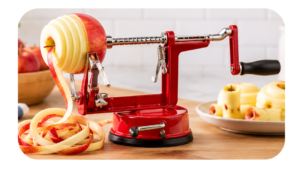
Next, remove the cores with an apple corer. If you are using an apple peeler-corer-slicer, you can leave the apples whole.
You can peel your apples if you prefer, but I like leaving the skins on.
Why?
Apple skins contain dietary fiber and beneficial plant compounds, including polyphenols. Keeping the peel means retaining more of what the whole apple naturally offers.
Plus, it’s one less preparation step!
Step 2: Slice Your Apples Evenly
Slice the apples into rings, wedges, or half-moons, depending on your preference.
Aim for slices approximately 1/8 to 1/4 inch thick.
The most important thing is consistency.
When slices are roughly the same thickness, they’ll dry at a more even rate.
Thinner slices tend to dry faster and can become crispier, while thicker slices often produce a softer, chewier texture.
Step 3: Should You Pretreat Apples Before Dehydrating?
Have you ever sliced an apple and noticed it beginning to turn brown almost immediately?
That’s a natural process called enzymatic browning.
When the cut surface of an apple is exposed to oxygen, enzymes in the fruit react with certain compounds, causing discoloration.
Browning doesn’t automatically mean the apple is spoiled, but pretreatment can help maintain a lighter, more appealing color.
An Easy Vitamin C Pretreatment
Ascorbic acid (vitamin C) is an effective option for reducing browning.
Lemon juice is my choice, although it is thought to be generally less effective than a properly prepared ascorbic acid solution and may add a slightly tart flavor. I always have lemon juice available, and I like the fresh taste, so that’s what I use.
But you can also prepare a solution using food-grade ascorbic acid according to the product’s directions for fruit pretreatment.
Do you have to pretreat your apples?
No. Pretreatment is optional for apples. It is thought to reduce browning and add back a bit of Vitamin C, but if you don’t mind a little natural browning, you can skip this step and move straight to the dehydrator.
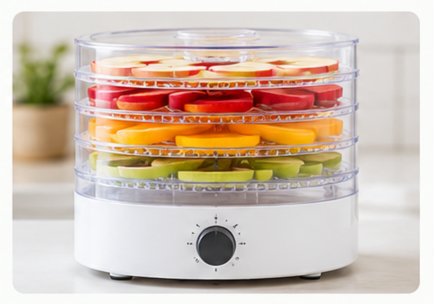
Step 4: Arrange the Apples on Your Dehydrator Trays
Place the apple slices in a single layer on your dehydrator trays.
Try not to overlap them.
Good airflow is important because the dehydrator needs to move warm air around the fruit to remove moisture effectively.
If you’re drying several trays at once, follow your dehydrator manufacturer’s instructions for tray placement and rotation.
Some models distribute air more evenly than others.
Step 5: What Temperature Should You Use to Dehydrate Apples?
For apples, I generally set the food dehydrator to 130°F (54°C) to no more than 140°F (60°C)
This is a commonly recommended temperature for drying fruit in a home dehydrator.
It’s warm enough to remove moisture efficiently without unnecessarily exposing the apples to excessive heat.
Remember, dehydrating isn’t the same as cooking. We’re trying to remove moisture while preserving as much of the fruit’s original quality as practical.
Step 6: How Long Does It Take to Dehydrate Apples?
Apple slices commonly take approximately 6–12 hours, although drying times can vary considerably.
Several things influence how quickly your apples dry:
Slice thickness
Apple variety
Moisture content
Room humidity
Dehydrator temperature
Air circulation
Number of trays being dried
For example, my apple peeler-corer-slicer creates slices approximately 1/4 inch thick. I stir them around in lemon juice and a water solution. They take, on average, 10 hours to dry.
Also, thin slices in a lightly loaded dehydrator may dry considerably faster than thick slices in a fully loaded machine.
Start checking your apples after approximately six hours, but don’t rely on the clock alone.
The condition of the fruit is more important than the number of hours it has spent in the dehydrator.
Step 7: How Do You Know When Dehydrated Apples Are Done?
This is one of the most important parts of the process.
Properly dried apples should generally feel leathery and pliable, with no visible moisture when cut or squeezed.
Here’s a simple way to check:
Remove a few pieces from different areas of the dehydrator.
Allow them to cool completely.
Cut or tear a thicker piece in half.
Check for visible moisture or dampness.
If the center still appears moist, return the apples to the dehydrator and continue drying.
Why let dehydrated apples cool first?
Warm fruit can feel softer than it actually is, making it difficult to judge the final texture.
If you’re aiming for crispy apple chips rather than chewy dried apples, continue drying until the slices reach your preferred crispness.
Just remember that all pieces need to be sufficiently dry before storage.
Step 8: Conditioning Your Dried Apples!
Here’s a step that I just learned about while researching this post — conditioning.
Even when apple slices appear completely dry, some pieces may contain slightly more moisture than others.
Apparently, conditioning helps distribute any remaining moisture more evenly throughout the batch, and can be an important step before long-term storage. I can help you identify condensation before putting the dried apples up for long-term storage.
I will be trying this on my next apple run, but here’s the general idea:
How to Condition Dehydrated Apples
Once the apples have cooled completely:
Loosely fill a clean, dry glass jar approximately two-thirds full.
Close the jar.
Shake the jar once a day for 7–10 days to separate the pieces.
Watch for condensation or moisture collecting inside.
If condensation appears, return the apples to the dehydrator for additional drying.
If you notice mold, discard the affected batch.
Once the conditioning period is complete and there are no signs of excess moisture, your apples are ready for packaging and storage.
How Long Do Dehydrated Apples Last?
The general consensus online is that dehydrated apples will last 6 to 12 months at room temperature when stored properly in an airtight container. Store them in a cool, dark, and dry place.
A Few Extra Tips for Better Dehydrated Apples
After you’ve dehydrated a few batches, you’ll probably develop your own favorite methods.
But these simple habits can help right from the beginning:
Keep the skins on. You’ll save preparation time while retaining more of the apple’s fiber and beneficial plant compounds.
Use consistent slices. Even thickness makes drying much easier to manage. Use an apple slicer gadget to help keep slice thickness consistent.
Don’t overcrowd your trays. Good airflow helps the apples dry more evenly.
Check the thicker pieces. They’re usually the last to finish drying.
Let everything cool before testing or packaging. This makes it easier to assess dryness and helps prevent condensation inside storage containers.
Label your finished batches. Include the apple variety, if known, and the date you dehydrated them.
Final Thoughts
One of my favorite things about dehydrating apples is that it turns something temporary into something you can enjoy for months.
A bucket of freshly picked apples might be more than you can eat before they begin to spoil, but a few hours of preparation and drying can turn that abundance into convenient homemade snacks.
And you don’t need to add sugar to make them taste wonderful.
Sometimes the simplest food preservation methods are also the most satisfying.
Used for: Apple selection, slice thickness, pretreatment options, drying temperatures, approximate drying times, testing for dryness, and conditioning.
Used for: General dehydration procedures, washing produce, arranging fruit on trays, airflow, pretreatment, and avoiding case hardening (when the outside dries too quickly and traps moisture inside).
Used for: The importance of conditioning dried fruit for 7–10 days, identifying condensation, reducing the risk of mold, and preparing dried foods for storage.
Used for: Explaining how dehydration concentrates apple flavor, the differences between chewy apple slices and crisp apple chips, and the role of pretreatment in reducing browning.
The Simple Guide to Dehydrating Apples | Part 1 – Nutrition
Fresh apples are full of goodness, but what happens when we remove most of their water? Do they lose their vitamins? Does their sugar content increase? And are those delicious little dried apple slices still a healthy snack?
Recently, I picked a bucket of apples from a friend’s tree and decided to dehydrate them. While preparing all those apple slices, I started wondering how much of their original nutrition would remain after drying.
As it turns out, dehydrating changes some things, preserves others, and makes certain nutrients more concentrated.
Let’s take a closer look.
First, What’s So Good About Apples?
Apples are a source of dietary fiber, vitamin C, potassium, and naturally occurring plant compounds called polyphenols.
A medium apple with its skin (approximately 182 grams) provides:
Nutrient
Approximate Amount
Calories
95
Carbohydrates
25 g
Dietary fiber
4.4 g
Natural sugars
19 g
Vitamin C
8.4 mg
Potassium
195 mg
Vitamin K
4 mcg
Vitamin B6
0.075 mg
Apples also contain smaller amounts of vitamin E, magnesium, copper, and other nutrients. 1
Two particularly interesting components are:
Pectin: A type of soluble fiber that supports digestive health and can help maintain healthy cholesterol levels.
Polyphenols: Naturally occurring plant compounds with antioxidant properties. Apples contain several, including quercetin, catechins, and chlorogenic acid.
Many beneficial apple compounds are found in or near the skin, so keeping the peel on is a good way to retain more of the fruit’s original nutritional value.
What Actually Happens When You Dehydrate an Apple?
Here’s something interesting: Fresh apples are approximately 85% water.
When you dehydrate them, you’re removing most of that moisture, leaving behind a much smaller, lighter, and more concentrated piece of fruit.
Most of the natural sugars remain. So do much of the fiber and minerals.
But some vitamins and plant compounds are more sensitive to the drying process.
The result is a food that still contains valuable nutrients, although its nutritional profile isn’t identical to that of a fresh apple.
Which Nutrients Survive Dehydration?
The good news is that several important nutritional components hold up relatively well during drying.
Fiber: Most of an apple’s dietary fiber remains. Removing water doesn’t simply remove the fiber along with it.
Minerals: Potassium, magnesium, calcium, and iron are generally stable during ordinary dehydration. Unlike some vitamins, minerals aren’t destroyed by heat.
Natural sugars and carbohydrates: These remain in the fruit, becoming more concentrated as water disappears.
However, nutrient retention can vary depending on preparation, temperature, drying time, and storage conditions.
Which Nutrients Can Be Lost During Dehydration?
This is where things get especially interesting.
Vitamin C: One of the More Vulnerable Nutrients
Vitamin C is sensitive to heat and oxygen, making it particularly susceptible to losses during dehydration.
A 2023 study examined Fuji apple slices dried using a home dehydrator.
Researchers found that vitamin C losses ranged from approximately 28% to 55%, depending on drying temperature and the amount of fruit loaded into the dehydrator.
Higher temperatures generally produced greater vitamin C losses under the conditions tested.
This doesn’t mean every dehydrated apple loses exactly that amount. It illustrates how drying conditions influence the nutritional quality of the finished fruit.
What About Other Vitamins?
Some B vitamins, including thiamin and folate, are also sensitive to certain processing conditions.
Their retention varies with the food, drying method, temperature, and exposure time.
Apples contain relatively small amounts of these vitamins to begin with, so vitamin C and polyphenols are especially interesting when discussing the nutritional changes that occur during apple dehydration.
Do Apples Lose Their Antioxidants?
Not entirely!
Apples contain polyphenols, which are naturally occurring plant compounds associated with antioxidant activity.
Some are sensitive to heat and oxidation, but others remain after drying.
Research has found that different drying methods can produce different results. Some methods preserve certain polyphenols better than others.
In other words, dehydrating doesn’t eliminate all the beneficial plant compounds in apples. It changes their amounts and sometimes their chemical forms.
Do Dehydrated Apples Have More Sugar Than Fresh Apples?
This is probably one of the most misunderstood things about dried fruit.
Dehydrating doesn’t create additional sugar. It removes water.
Imagine eating one fresh apple.
Now imagine slicing and dehydrating that same apple until it fits into a small handful of dried pieces.
Assuming nothing is added and allowing for ordinary processing losses, you’re still eating approximately the same amount of natural sugar that was in the original apple.
The difference is that it takes up much less space.
This makes dried apples easy to eat in larger quantities without realizing it.
For example, you might comfortably eat the dried equivalent of two or three apples in one sitting, even though you wouldn’t normally eat three fresh apples as a snack.
That’s why dried fruit has more calories and sugar per ounce than fresh fruit.
It isn’t automatically less healthy. It’s simply more concentrated. So go easy!
Fresh vs. Dehydrated Apples: Which Is Better?
Both have something to offer.
Fresh Apples
Dehydrated Apples
High water content
Most water removed
Retain original vitamin C
Some vitamin C may be lost
Provide dietary fiber
Retain much of their fiber
Larger volume per serving
More concentrated
Naturally sweet
Sweeter-tasting
Shorter storage life
Longer storage life when properly dried
Fresh apples are wonderful for hydration, fiber, and enjoying the fruit in its original form.
Dehydrated apples are convenient, portable, naturally sweet, and a useful way to preserve an abundant harvest.
You don’t have to choose one over the other!
A Few Ways to Get More From Your Dried Apples
If you’re dehydrating apples at home, a few simple choices can help you make the most of them.
Keep the peel on when practical.
Start with fresh, good-quality apples.
Avoid unnecessarily prolonged exposure to heat and air.
Store the finished fruit properly to help protect its quality.
And remember, you don’t need to add sugar to make dehydrated apples delicious. Their natural sweetness becomes more noticeable as their water content decreases. Adding a bit of cinnamon and nutmeg adds a warm flavor – great for breaking into a bowl of oatmeal.
Final Thoughts: Dehydrating apples is a trade-off, but a pretty useful one
We may lose some vitamin C and certain plant compounds during the drying process, but we retain much of the fiber, minerals, and natural goodness of the original fruit.
And perhaps one of the biggest benefits is simply being able to enjoy apples that might otherwise have gone to waste.
That bucket of apples from my friend’s tree can become months of homemade snacks and toppings for my oatmeal instead of fruit that spoils before I have a chance to eat it.
Sometimes preserving good food is a healthy habit all by itself.
Used for: Nutritional information for raw apples with skin, including calories, carbohydrates, dietary fiber, natural sugars, vitamins, and minerals.
2. Monsalves, J., & Scheuermann, E. (2023). Home-Drying Operation Effect on Moisture Content, Electric Energy Consumption, Ascorbic Acid, Total Polyphenol Content, and Color of Sliced “Fuji” Apples. https://pmc.ncbi.nlm.nih.gov/articles/PMC10689070
Used for: The discussion of vitamin C losses during dehydration, the effects of drying temperature and fruit quantity, and changes in apple polyphenols. This is particularly relevant because the researchers used a home dehydrator.
3. Yuste, S., et al. (2020). Thermal and non-thermal processing of red-fleshed apple: How are (poly)phenol composition and bioavailability affected? Food & Function, 11, 10436–10447. https://doi.org/10.1039/D0FO02631J
Used for: Explaining how different drying methods affect apple polyphenols, why some antioxidant compounds are better preserved than others, and why nutrient retention depends on the processing method.
Used for: Explaining how lower drying temperatures can help preserve beneficial apple polyphenols. Researchers found that apple slices dried at 40°C (104°F) retained up to approximately 50% more of certain polyphenols than slices dried at 65°C (149°F). The study also supports the importance of pretreatment and appropriate packaging in preserving the color, flavor, and overall quality of dehydrated apples.
Used for: General principles of food dehydration, preparation methods, moisture removal, and research-based home preservation guidance.
5. Cozzolino, R., Palumbo, M., Cefola, M., Capotorto, I., Linsalata, V., Forte, G., Petriccione, M., De Giulio, B., & Pace, B. (2022). Biochemical characterization of apple slices dried using low temperature and stored in modified atmosphere packaging. Journal of Food Composition and Analysis. https://doi.org/10.1016/j.jfca.2022.104694
Used for: Explaining how lower drying temperatures can help preserve beneficial apple polyphenols. Researchers found that apple slices dried at 40°C (104°F) retained up to approximately 50% more of certain polyphenols than slices dried at 65°C (149°F). The study also supports the importance of pretreatment and appropriate packaging in preserving the color, flavor, and overall quality of dehydrated apples.
Some of the links on NatCurious.com are affiliate links, which means we may earn a small commission if you choose to make a purchase—at no extra cost to you.
This is just a short post about something I’ve been thinking about today:
Don’t waste your energy, time, or attention on stuff that’s not worth your energy, time, or attention.
It sounds obvious. But how often do we do exactly the opposite?
We replay a conversation that didn’t go the way we wanted. We worry about something we can’t control. We read the comment. We respond to the person who clearly isn’t interested in understanding us. We spend an hour thinking about a problem that may never happen.
And meanwhile, the things that actually matter are waiting for us. The walk we wanted to take. The book we wanted to read. The person we love who would enjoy an hour of our undivided attention. The project we’ve been putting off. The quiet moment we desperately need.
And I think this is how overwhelm starts to build: you fill your day with things that aren’t that important — to you. Then all the things you really want to do and care about are still waiting for you, and starting to stack up! I found myself in this situation today, doing things that just sprang up out of nowhere instead of what I intended to do. I could recognize the feelings of overwhelm that I have been learning about in my Neurotoned program. The whirling thoughts; the feelings of frustration. Then I paused, sat down, took a breath, and thought, “wait a minute…“
Your energy is not unlimited. Your time is not unlimited. And your attention certainly isn’t unlimited.
So maybe the question isn’t:
“How do I get everything done?”
Maybe it’s:
“Does this deserve me?”
Because not everything deserves your energy.
Not everything deserves your attention.
And not everything deserves a piece of your peace.
Final Thoughts:
You don’t have to care less.
You just have to become more curious about what is actually worth caring about.
Helpful Tools
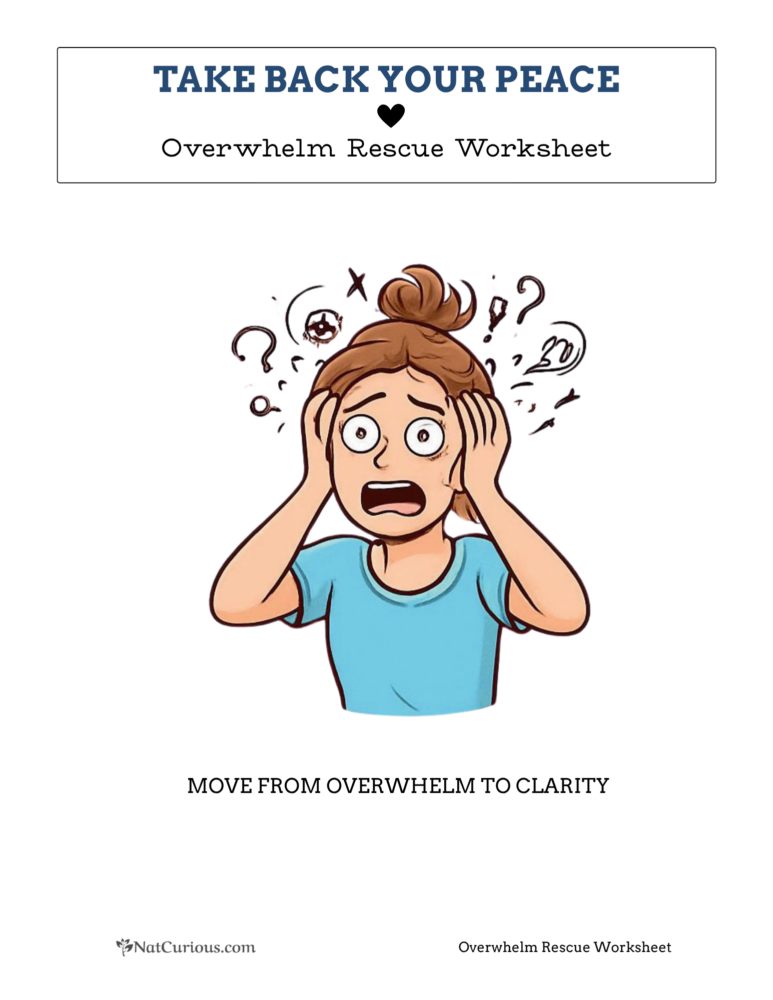
I have two tools for you that may help: One; my Overwhelm Rescue Worksheet Bundle, available through Kit.com. I built this out of my own desire to relieve some overwhelm before it became full-blown burnout. It’s objective and helpful.
Another is a program I personally use is called Neurotoned. It’s an ever growing collection of nervous system reset programs designed to bring you back home to yourself, from the inside out. The wonderful, experienced practitioners guide you through simple techniques you can do at home. These have been incredibly helpful in my journey back from burnout.
Many of their standalone programs (like the Vagus Nerve Reset) use a one-time payment with a 30-day money-back guarantee instead of a subscription.
They also have a 30-day program with one payment, and the program is yours for life, with no renewal on it and nothing you have to cancel to keep it. The program doesn’t end in 30 days; that’s just an everyday pace if you want to do that. Otherwise, you have access to the program for as long as you like! That’s good for busy people like me, that can reasonably check in a few times a week.
The Neurotoned 30-Day Program includes:
The 30-Day Neurotoned Program, plus Welcome and Foundations onboarding,
The Understanding Your Nervous System Journey educational track,
Thirty daily 10-15 minute practices organized in four themed weeks (Emotional Healing, Physical Symptoms, Resilience Building, Self-Care),
The Advanced Emotional Tools bonus,
The Co-Regulation for Parents track,
The Reflection Exercises closing arc,
The From Stigma to Strength module,
and lifetime access on the Neurotoned app.
I’ve a few of the Neurotoned courses and highly recommend them, especially this 30-day program. It’s a good value.
P.S. I also like that have a strong policy of privacy for their community members and never share your information with any third party.
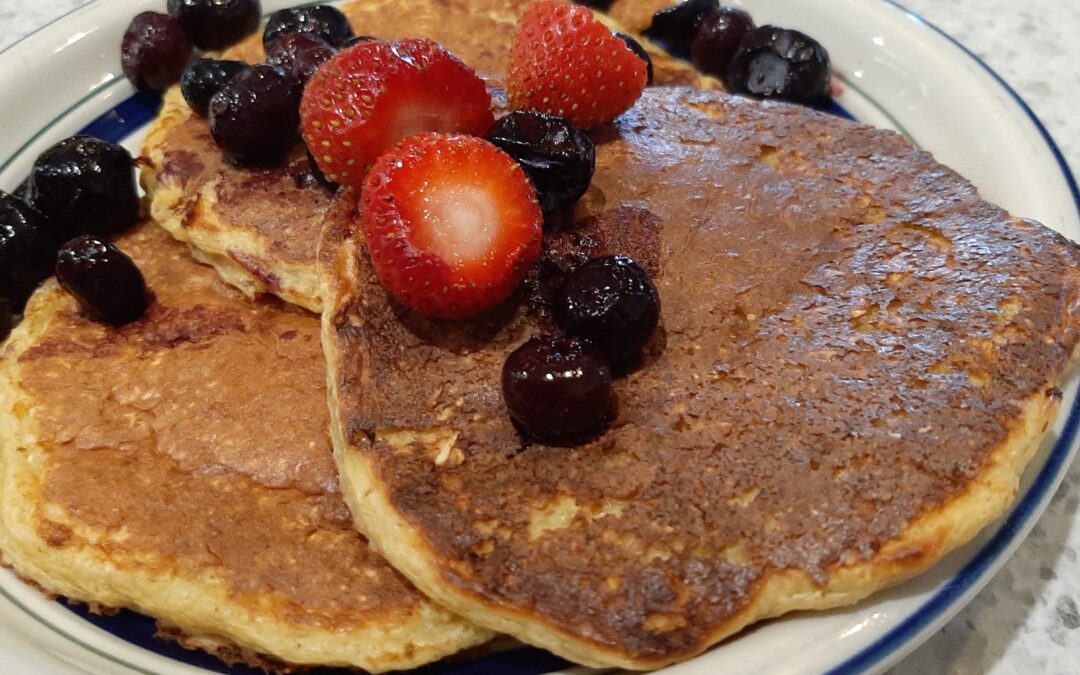
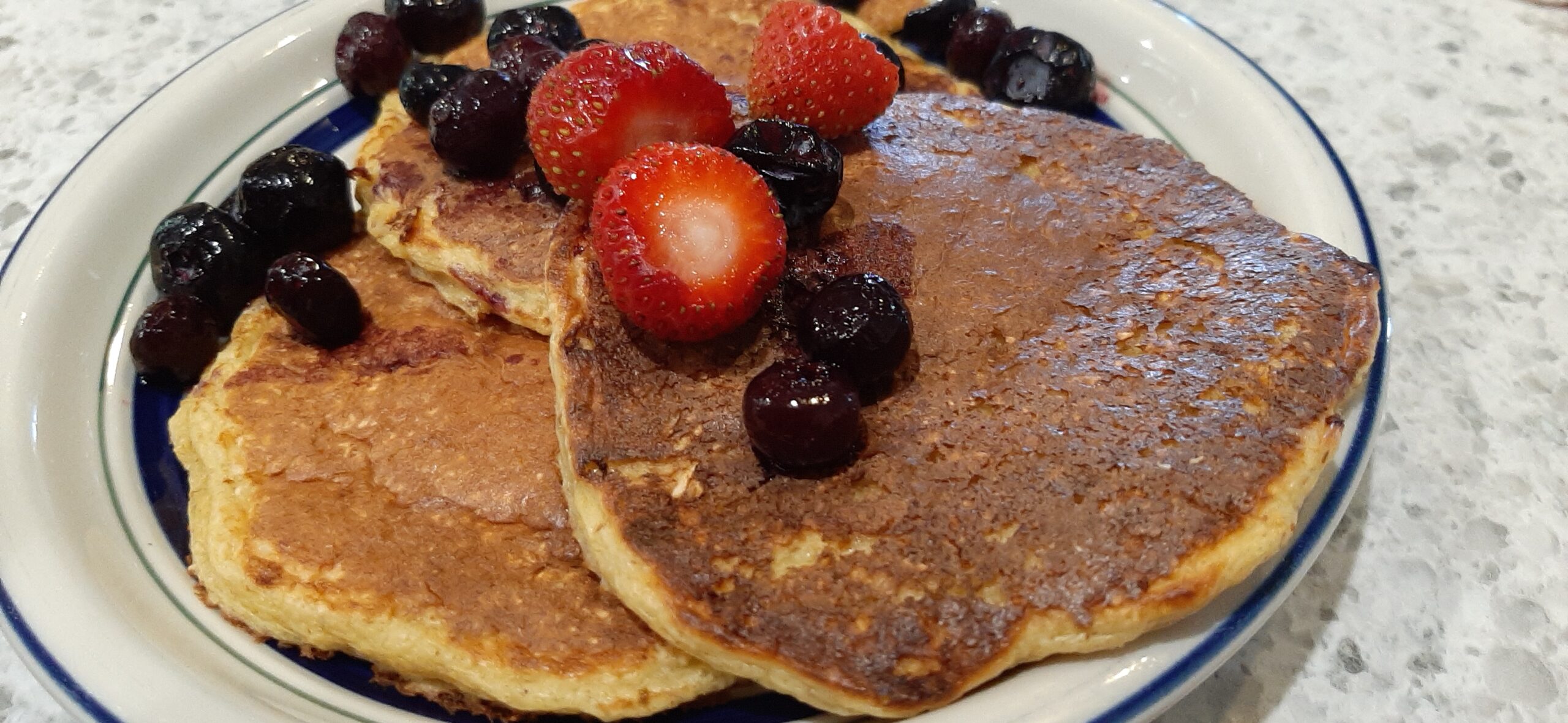
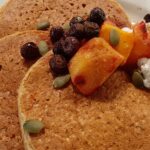
Here’s a recipe that has become a staple in my eating plan. I do eat bread on special occasions, like on homemade pizza night. But generally, I try to limit bread and pasta. And if you love pancakes as much as I do and are looking for a gluten free, and fairly high-protein version, this is a great recipe.
Some of the links on NatCurious.com are affiliate links, which means we may earn a small commission if you choose to make a purchase—at no extra cost to you.
My diet isn’t totally gluten free, but I look for ways to be mostly gluten free. This recipe makes excellent pancakes, makes a great substitute for toast, works well as a base for a melt (like a tuna melt), and serves as “bread” for a sandwich — all gluten free.
You can make them up ahead of time and store them in your fridge for a quick snack or breakfast to go. Just pop them in your toaster to reheat, then spread on avocados, or maybe almond butter, honey, whatever you like. I can eat them plain — they are tasty on their own and feel much more satisfying than a traditional pancake.
About “Gluten Free” Oats
Yes, oats are generally considered gluten free, but they may be processed in a facility that processes sources of gluten. If you are sensitive, it’s best to buy oats that are certified gluten free. Here are a few ideas:
Bob’s Red Mill: Processed in a dedicated gluten-free facility and batch tested.
GF Harvest: Uses purity protocol oats tested to under 10 PPM.
1cuprolled oats(If it's important, make sure your rolled oats is certified GF.)
1cupcottage cheese
2largeeggs
2tspcinnamon
2tspbaking powder
2tspvanilla extract
1/8tspground nutmeg(Optional)
1 scoopprotein powder of your choice(Optional – If using, add a bit of milk or water to maintain batter consistency.)
1tspground flaxseed(Optional – If using, add a bit of milk or water to maintain batter consistency.)
Instructions
If using an nonstick electric skillet, turn it on and set the heat to about 360℉. Other pans can wait a bit to heat up.
I do not use oil in nonstick pans as it tends to be hard to clean. You may need a bit of oil in other types of skillets. Avocado oil or lard can work here.
Always have your pan hot before adding the pancake batter or the pancakes will stick.
Mix the Batter
Place 1 cup rolled oats in the blender. If using old fashioned oats instead of quick oats, pulse the blender a few times to make the oat flakes smaller.
Add 1 cup cottage cheese, 2 large eggs, 2 tsp cinnamon, 2 tsp baking powder, 2 tsp vanilla extract, and 1/8 tsp ground nutmeg (if using) to blender.
Optional: Add 1 scoop protein powder of your choice to blender to boost protein. Have a few tablespoons of milk, almond milk, coconut milk, or water to make batter less thick if needed.
Optional: Add 1 tsp ground flaxseed to blender to boost omega-3 fatty acid, and soluble and insoluble fiber. Have a few tablespoons of milk, almond milk, coconut milk, or water to make batter less thick if needed.
Blend until smooth about 20 to 30 seconds. If needed, stop blender and use a plastic spatula to push any oats away from the blender corners. Then blend another few seconds.
This is a thick batter, so if needed to get things mixed, add a few tablespoons of milk or water and pulse for a few seconds.
Cook Pancakes
If you haven't already heated your nonstick skillet or griddle, do so now to medium heat (about 360℉).
Once your pan is hot, use a 1/4 measuring cup to scoop up the pancake batter. (This batter is thick, so it is not really pourable.)
Add the 1/4 cup of batter to your pan and spread into a circle using the edge of your cup or a spatula.
Place additional scoops in your pan as space allows.
Use a spatula to help scoop out the batter in the bottom of the blender when it gets close to the bottom.
Cook for about 3 minutes until the edges start to firm and a few bubbles appear in the pancake.
Using a spatula, flip the pancake and cook for another 3 minutes. These pancakes should be golden brown.
Remove to a plate and enjoy with berries, honey, kefir, yogurt, or chopped nuts. Or go traditional with a bit of 100% maple syrup!
I keep any leftover pancakes in the refrigerator up to a week for a quick protein snack or to use as gluten free “bread” for a sandwich.
Video
Recipe Notes
Nutritional facts are sourced from the USDA Food Data Central through MyFoodData.com and are estimates.Fiber amount is without added ground flaxseed. Protein amount is without added protein powder.
Some of the links on NatCurious.com are affiliate links, which means we may earn a small commission if you choose to make a purchase—at no extra cost to you.
Why your brain can feel like a completely different place by 8 pm
Have you ever had a brilliant idea at 8 a.m. and wondered why, by 8 p.m., the same idea suddenly feels impossible?
Or maybe you’re the opposite. Your brain doesn’t seem to fully wake up until the afternoon, and suddenly you’re writing, planning, solving problems, and connecting ideas that felt completely out of reach that morning. You are rolling.
This is me. I am up pretty early every day. But I read, meditate, take my walk, eat a healthy breakfast, maybe clean the dishes, water plants. But I generally do not sit down to write or create until 11 am or later. I know for a fact that I am most focused, productive, and totally in the zone during the afternoon. But why?
It turns out there’s a biological reason for some of this.
Your brain’s chemistry, physiology, and performance change across the day.
Not because you have two different brains. And not because you’re suddenly smarter or less intelligent, although thinking that I am smarter in the afternoon would definitely give me nice little ego boost. The more likely reason is that my brain is responding to an internal timing system that influences hormones, sleep pressure, alertness, attention, mood, and aspects of cognitive performance.
In other words: The brain you wake up with isn’t quite the same brain you take to bed.
Morning: Your Brain Gets a Wake-Up Signal
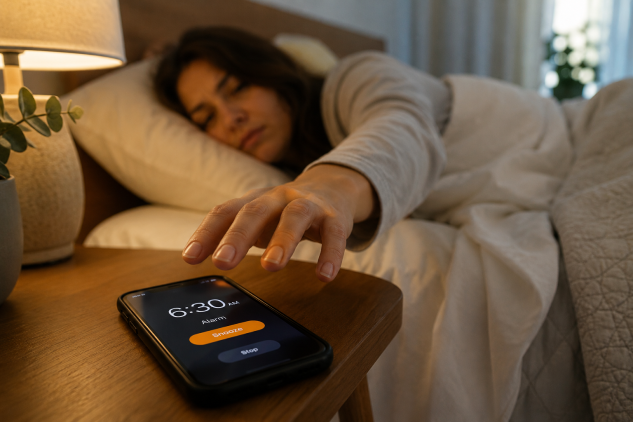
When morning arrives, your body isn’t simply responding to the alarm clock.
Your internal circadian system has been preparing you for wakefulness.
Light entering your eyes helps synchronize your brain’s master circadian clock with the outside world. As morning approaches, melatonin production falls while cortisol normally rises.
Cortisol gets a bad reputation because we tend to associate it with stress. But cortisol isn’t inherently “bad.”
In a healthy circadian rhythm, cortisol normally rises around waking and helps wake us up for the active part of the day. Think of it as part of your body’s morning boot-up sequence. Your brain is being told that it’s time to wakeup.
That doesn’t mean you’re at your intellectual peak the instant your feet hit the floor. Sleep inertia can temporarily make thinking feel slower. But as sleep fades and your circadian system creates wakefulness, your mental state changes.
And another system is quietly keeping track of how long you’ve been awake.
Adenosine: The “You’ve Been Awake All Day” Signal
While your circadian clock helps regulate when you should be awake, another system keeps track of the amount of time you’ve spent awake. One important molecule involved is adenosine.
Photo by Mizuno K: https://www.pexels.com/photo/woman-drinking-coffee-and-holding-a-digital-tablet-13801838/
As being awake continues, the pressure for your body to sleep, to rest (sleep pressure) builds. Adenosine signaling is part of the process that contributes to increasing sleepiness at the end of your day — or maybe in the middle of it. This is one reason caffeine works.
Caffeine doesn’t create energy out of thin air. It temporarily blocks adenosine receptors, reducing the sensation of sleepiness. And as the day goes along and the hours pass, the balance between your circadian drive for wakefulness and your accumulating pressure to sleep continues to change.
Your Day May Have a Peak, a Trough, and a Recovery
In his 2018 book, When: The Scientific Secrets of Perfect Timing, Daniel Pink pulls together research on chronobiology, psychology, economics, and human performance to make a deceptively simple argument:
When you do something can matter almost as much as what you’re doing.
Pink describes a common daily pattern as:
Peak → Trough → Recovery
For many people, the peak occurs earlier in the day. This is when alertness and mood tend to be relatively high, making it a potentially good time for tasks that require sustained attention and analytical thinking.
Then comes the trough. For many people, this occurs in the afternoon — a period when alertness, mood, and certain aspects of performance can dip. We’ve all looked for the mid-afternoon coffee or sugary drink (or combo) during this time .
And then comes the recovery. Later in the day, some measures of mood rebound, and a different kind of thinking may become easier. But this doesn’t necessarily mean your brain suddenly becomes “better” in the evening, although it may feel like it.
It means different conditions can favor different kinds of thinking.
Pink’s practical recommendation is to match the task to the time:
Peak → analytical work
Trough → routine or administrative work
Recovery → insight and creative work
His research-based framework ultimately suggests that we shouldn’t expect our brains to perform identically from morning to night. And that’s a pretty liberating idea.
NatCurious Note
Daniel Pink’s When: The Scientific Secrets of Perfect Timing is a fascinating exploration of how timing affects our work, health, decisions, and everyday lives. It’s truly one of my favorite books.
Your Best Work Time May Not Be Morning
Here’s where a discussion of chronotypes becomes especially important.
You may be a morning-oriented person — a “lark or lion.”
You may be more evening-oriented — an “owl or wolf” You may prefer staying up late, feel most creative or alert at night, and struggle with early mornings.
Or you may fall somewhere in between, like a Bear: You follow the solar cycle closely; make up the majority of the population and fit best with standard 9-to-5 schedules.
Or a dolphin: Light sleepers with erratic or easily disrupted sleep patterns who often struggle with insomnia.
And these differences matter.
Pink notes that most people tend to follow the peak–trough–recovery sequence, but a substantial minority — roughly 20% — are more evening-oriented and may experience their best analytical period later in the day. (ICMA) That means telling everyone to do your hardest thinking first thing in the morning isn’t really the great advice. The better advice is:
Find your peak.
Research published in Nature Communications supports this idea. Salehinejad and colleagues found that cognitive performance and measures related to brain physiology were associated with chronotype, with people generally performing better when tested at a time more aligned with their biological preference.
So instead of asking:
“What’s the best time of day to think?”
Try asking:
“What’s the best time of day for my brain to think?”
Why Creative Thinking Can Feel Different Later
Here’s an especially interesting distinction. Analytical problems often benefit from strong focus and inhibitory control — the ability to keep irrelevant thoughts and information out. But insight problems can sometimes benefit from the opposite: When your mind is a little less tightly focused, unusual connections can slip through.
Pink highlights research suggesting that periods of reduced vigilance can sometimes be advantageous for insight problems, even though that same looseness can be a disadvantage for analytical tasks. That’s a fascinating reversal.
The mental state that makes you slightly worse at carefully checking a spreadsheet might occasionally make you better at thinking of creative solutions. Like, “Wait…what if we tried it this way?”
So maybe your evening brain isn’t broken if you can’t do spreadsheets or analyze your finances then. Maybe it’s simply playing a different game.
Evening: Your Brain Begins Changing Gears
As daylight fades, your circadian system begins shifting toward your nighttime body, or physiology.
Melatonin production rises in dim light and helps signal that the biological night is approaching. (That’s why it’s good to move to softer lighting and reduce blue light from devices.)
Melatonin doesn’t simply knock you out, although many taking melatonin supplements think it does. But it’s more like a biological message that it’s time to wrap it up: night is coming.
At the same time, you’ve accumulated hours of wakefulness — and therefore more sleep pressure. So your evening brain is working under a different combination of influences:
Less morning-type wakefulness + more sleep pressure + increasing nighttime signaling.
That’s a very different environment from the one you experienced after waking. And this may help explain something many of us have experienced. And that is that you can be physically tired while your mind suddenly feels surprisingly loose, imaginative, or reflective.
Pink’s peak–trough–recovery framework gives us one way of understanding why, with recovery assisting in insight and creative work.
The Goal Isn’t to Just Become a Morning Person
This is where I think the science gets especially useful. We’re often told to be our best self by waking earlier, working harder or getting more done — using every minute productively. Not only will that lead to overwhelm or burnout, you brain just isn’t a machine that produces exactly the same output from 6 a.m. to 10 p.m.
As we’ve learned, I lot of factors go in to how you perform on what type of task. Factors like timing, sleep, light, circadian rhythm, your chronotype, what you are actually working on — these factors all matter.
Pink’s framework boils it down beautifully:
Match your type, your time, and your task.
This interview from Financial Times with Pink recommends the following:
If you’re naturally alert in the morning, use that window for demanding analytical work.
If you’re an evening type, don’t assume your brain is “wrong” because your best work happens later.
And when the afternoon slump arrives? Don’t think of it as personal failure. Maybe it’s biology.
Try a One-Week Brain Experiment
For the next week, don’t try to become a different kind of person. Just become a better observer of yourself — and jot down what you discover.
Notice when ideas seem to arrive easily. Notice when you make careless mistakes.
Notice when your brain feels sharp. Notice when it feels foggy.
You may discover:
Morning: Great focus, poor creativity. Afternoon: Low energy, excellent time for routine tasks. Evening: More relaxed, surprisingly creative.
Or you may discover the exact opposite.
And then get curious. Your brain may already be telling you when it does its best work.
Final Thoughts
Don’t just ask what you need to do. Ask when your brain is best suited to do it. Because sometimes the productivity problem isn’t that you’re doing the wrong thing. You’re just doing the right thing but at the wrong time.
And we do have to be realistic here; sometimes when we do tasks isn’t completely ours to control. But maybe team brainstorming meetings should be met in the afternoons as much as possible. Or maybe you do your best analytical stuff in the afternoon, but the report is due at 10 a.m. Having a discussion with your boss about rescheduling this task to mid afternoon might be a good idea.
I mean after all, what supervisor would be unwilling to create an environment where employees do their best at their best time? I know, sometimes I live in a fantasy world, but, hey, it’s worth a try.
For deeper exploration, check out the sources below from peer-reviewed research, trusted health institutions, or other evidence-based articles:
Basheer, R., Strecker, R. E., Thakkar, M. M., & McCarley, R. W. (2004). Adenosine and sleep-wake regulation. Progress in Neurobiology, 73(6), 379–396. https://doi.org/10.1016/j.pneurobio.2004.06.004
Blume, C., Garbazza, C., & Spitschan, M. (2019). Effects of light on human circadian rhythms, sleep and mood. Somnologie, 23, 147–156. https://doi.org/10.1007/s11818-019-00215-x
McHill, A. W., & Wright, K. P., Jr. (2019). Cognitive impairment in humans during circadian misalignment. Current Opinion in Endocrine and Metabolic Research, 5, 87–92. https://doi.org/10.1016/j.coemr.2018.11.003
Salehinejad, M. A., Wischnewski, M., Ghanavati, E., & others. (2021). Cognitive functions and underlying parameters of human brain physiology are associated with chronotype. Nature Communications, 12, 4672. https://doi.org/10.1038/s41467-021-24885-0
Yamazaki, M., et al. (2023). Diurnal variation in variables related to cognitive performance: A systematic review. Sleep and Breathing, 27, 1861–1874. https://doi.org/10.1007/s11325-023-02895-0
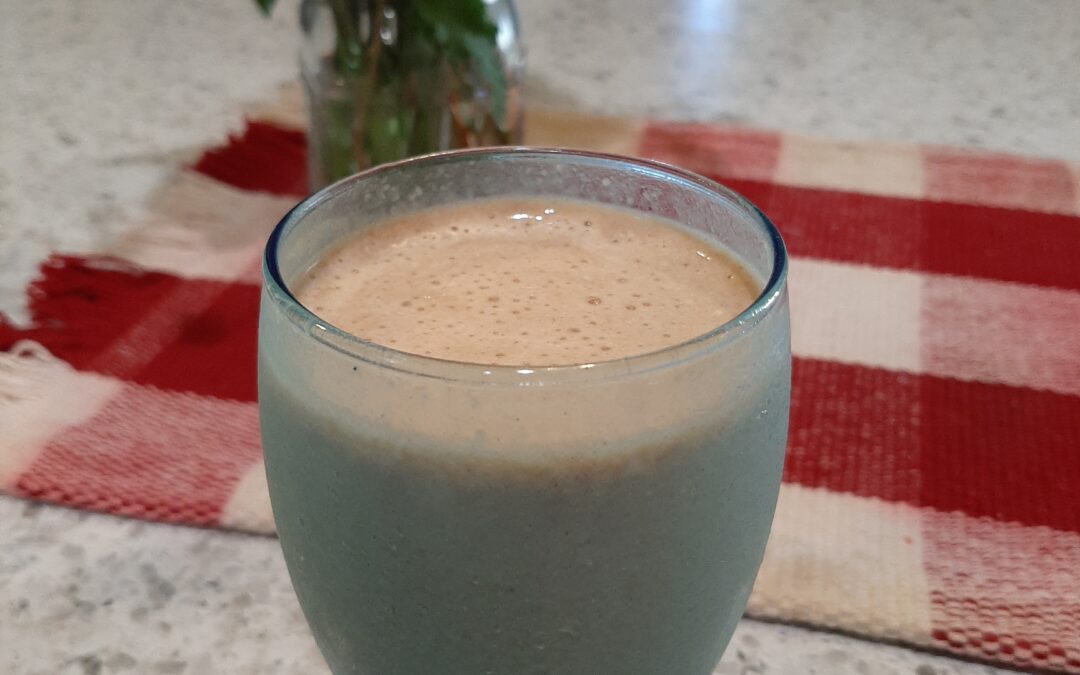
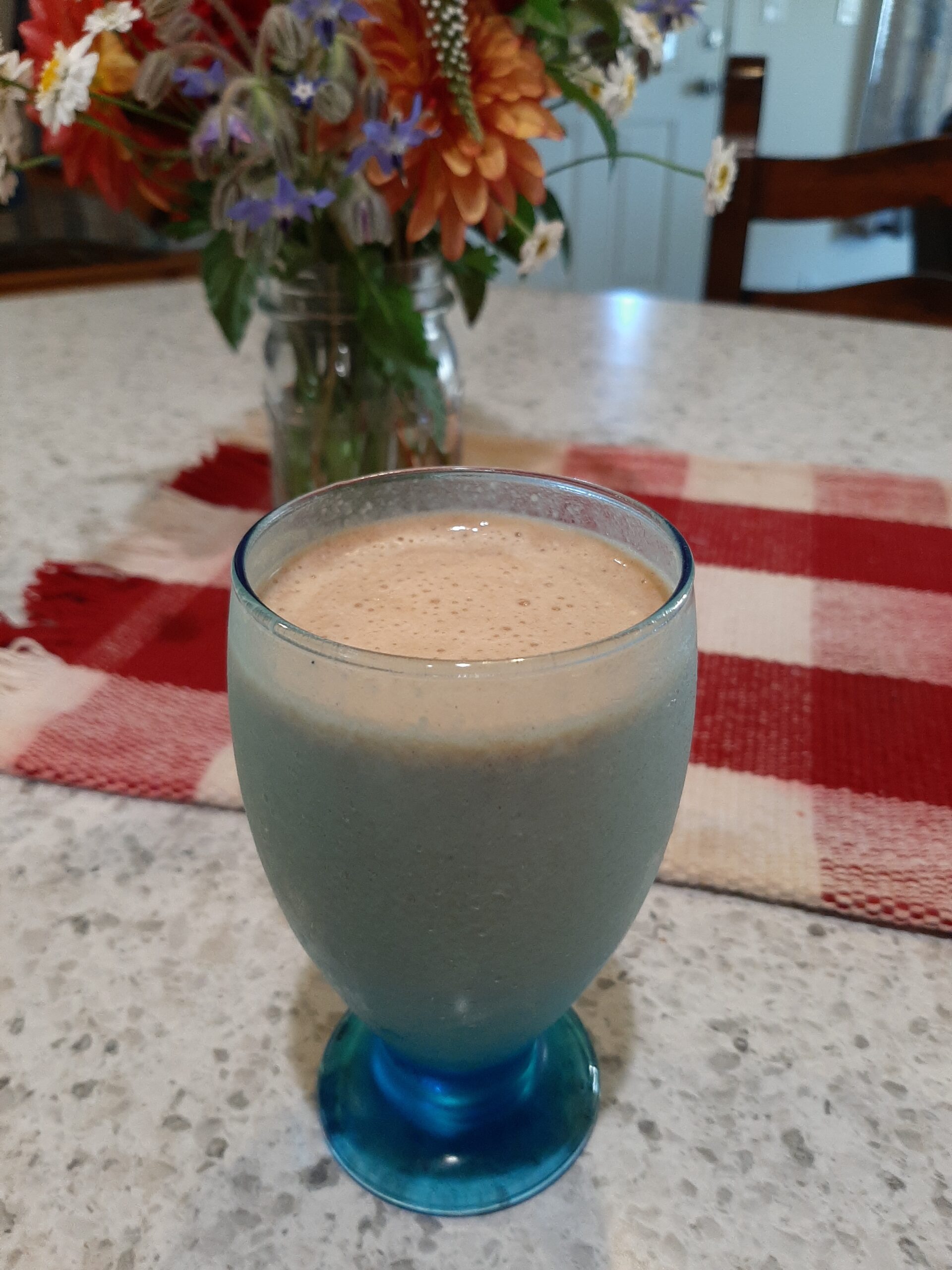
Some summer cravings don’t need a complicated recipe. This simple homemade milkshake is creamy, refreshing, and feels like the perfect little pause in the middle of a warm day.
I came up with this recipe on one of those scorching summer afternoons when it was about 103°F outside. I wanted an easy way to boost my protein intake but needed a break from my usual handful of nuts. On a whim, I tossed in some frozen mango for a little natural sweetness—and it turned out to be exactly what I was craving. Creamy, refreshing, and surprisingly satisfying.
Highlights of this High Protein Treat
22 grams of protein makes this an excellent post-workout snack or breakfast.
Mango provides natural sweetness plus vitamin C, which helps your body absorb iron.
Whole milk contributes calcium, vitamin D, and healthy fats for satiety.
The chocolate protein powder pairs surprisingly well with mango—the tropical sweetness softens the cocoa flavor.
My New Healthier Chocolate Milkshake
This easy to make delicious milkshake satisfies my craving for a summer day treat.
1cupfrozen mango chunksor any frozen fruit of your choice
Instructions
Add frozen mango chunks, milk, and protein powder to the blender
Keep extra milk at the ready in case the milkshake becomes too thick for the blender to process it. If so, add a tablespoon or so at a time to desired consistency.
Start by processing on an "ice" setting for about 10 seconds
Move to normal blend mode for about 30 seconds to 1 minute
That's it! Pour into two glasses and share with a friend.
You can keep extra in the refrigerator for a few hours. It may not be milkshake-y, but with a good stir, it makes a delicious chocolate milk.
Protein is based on your particular protein powder and the type of milk you use. This recipe came in at 28 grams of protein total using the whole milk and Designer Wellness Chocolate Protein Powder. So split between 2 servings that is 14 grams of protein each.
Nutrition
Calories: 220kcal | Protein: 14g
Some of the links on NatCurious.com are affiliate links, which means we may earn a small commission if you choose to make a purchase—at no extra cost to you.
Tiny foods. Big nutrition. But not all sprouts are created equal.
If you’ve ever walked past a package of sprouts in the grocery store, you may have wondered…
“Aren’t they basically all the same?”
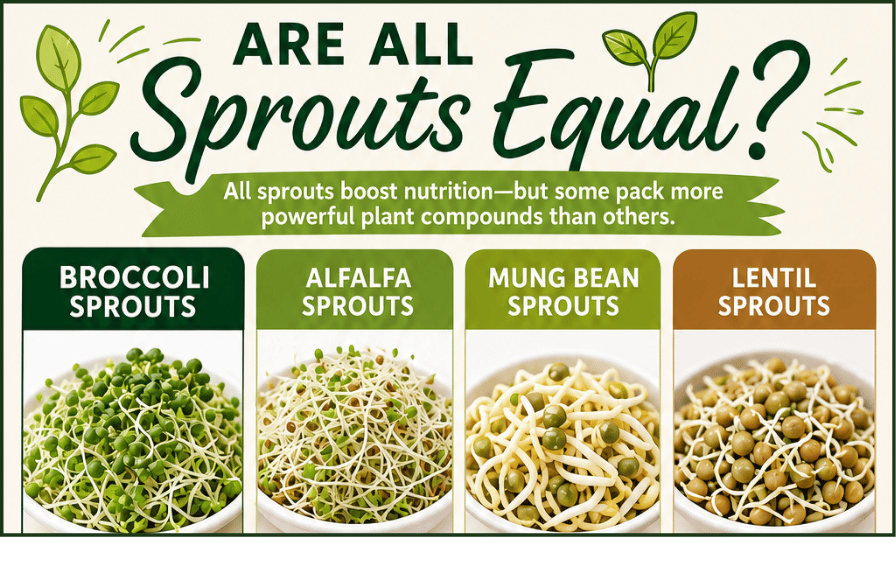
Not quite. All sprouts are nutritious, but each type has its own strengths. Some are protein powerhouses. Others are loaded with antioxidants. And one, in particular, has become famous among nutrition researchers. Let’s take a closer look.
First, Why Are Sprouts So Healthy?
When a seed begins to sprout, something remarkable happens. Dormant nutrients become active. During germination, many sprouts:
Increase certain vitamins
Produce more antioxidant compounds
Become easier to digest
Reduce phytic acid, improving mineral absorption
Activate natural enzymes that help the young plant grow
That’s why sprouts are often considered one of nature’s most nutrient-dense foods.
Broccoli Sprouts: The Phytonutrient Powerhouse
If sprouts had a superstar, broccoli sprouts would probably wear the crown. Their claim to fame isn’t protein or vitamins. It’s sulforaphane.
Sulforaphane is produced when broccoli sprouts are chopped or chewed. (See my post on the Hack and Hold method ) It has been extensively studied for its ability to activate the body’s own protective antioxidant and detoxification systems.
Research suggests sulforaphane may help support:
Healthy inflammatory responses
Cellular protection from oxidative stress
Cardiovascular health
Brain health
Normal detoxification pathways
Young broccoli sprouts can contain 20–50 times more glucoraphanin (the precursor to sulforaphane) than mature broccoli by weight, making them one of the richest dietary sources available.
Nutritional Highlights of Broccoli Sprouts
Sulforaphane precursor (glucoraphanin)
Vitamin C
Vitamin K
Folate
Potassium
Calcium
Magnesium
Fiber
Antioxidants
Best for: Anyone looking to maximize protective plant compounds.
Alfalfa Sprouts: Light, Fresh, and Full of Plant Compounds
Alfalfa sprouts are probably the sprouts most people recognize. I know that was the very first sprout I tried back in the late 80s. It was a staple of my veggie sandwich. They’re mild, crunchy, and easy to add to sandwiches and salads.
Unlike broccoli sprouts, alfalfa’s strength comes from different plant compounds. They naturally contain:
Saponins
Flavonoids
Phytoestrogens (plant compounds that can interact with estrogen receptors)
Vitamin K
Vitamin C
These compounds have been studied for supporting:
Heart health
Healthy cholesterol levels
Antioxidant defenses
Their mild flavor and light texture makes them one of the easiest sprouts to enjoy every day.
Best for: Everyday salads, wraps, and sandwiches.
Mung Bean Sprouts: The Crunchy Classic
If you’ve ordered stir-fry or pho, you’ve probably eaten mung bean sprouts. These crunchy sprouts are especially valued for their:
Vitamin C
Phenolic antioxidants
Potassium
Fiber
Hydration (they’re mostly water)
Sprouting also improves protein digestibility compared with dry mung beans.
They’re refreshing, inexpensive, and versatile.
Best for: Stir-fries, soups, salads, and fresh spring rolls.
Lentil Sprouts: Small but Filling
Lentil sprouts don’t get as much attention—but they deserve it. Compared with many other sprouts, lentil sprouts provide:
More protein
More iron
More fiber
Folate
Potassium
They’re hearty enough to become part of a meal instead of simply a garnish.
Best for: Grain bowls, salads, wraps, and meal prep.
So… Which Sprout Is the Healthiest?
There’s no single winner. Although because of the protective phytonutrients in Broccoli, it’s up there in the list. But really, each sprout offers something unique.
Sprout
Best Known For
🥦 Broccoli
Sulforaphane & protective phytonutrients
🌿 Alfalfa
Everyday antioxidants & phytoestrogens
🌱 Mung Bean
Vitamin C & easy digestion
🌾 Lentil
Protein, fiber & iron
Think of them as a team instead of competitors.
Eating a variety gives you a wider range of beneficial nutrients and plant compounds.
Can You Grow Them Yourself?
Absolutely. One of the best things about sprouts is how little you need to get started.
With a jar, clean water, quality sprouting seeds, and a bowl for draining, you can grow fresh sprouts on your kitchen counter in about 3–5 days, depending on the variety. Growing them yourself is inexpensive, satisfying, and gives you a fresh harvest whenever you want one. Check out this post on how to grow your own sprouts!
A Few Food Safety Tips
Because sprouts grow in warm, moist conditions, they can also provide an environment where harmful bacteria can multiply if seeds are contaminated. To reduce risk:
Buy seeds intended specifically for sprouting.
Rinse sprouts thoroughly.
Use clean jars and equipment.
Refrigerate finished sprouts promptly.
If you’re pregnant, immunocompromised, or an older adult, consider cooking sprouts before eating them.
Final Thoughts
Nutrition research is always evolving. While broccoli sprouts have been widely studied for their unique phytonutrients, no single food is a magic bullet for health. A balanced diet filled with a variety of fruits, vegetables, whole grains, legumes, nuts, seeds, and other minimally processed foods provides the widest range of nutrients and protective plant compounds.
If you’re curious about the science behind sprouts and their health benefits, these trusted resources are a great place to start.
Keep Learning
If you’re curious about the science behind sprouts and their health benefits, these trusted resources are a great place to start. Check out the sources below from peer-reviewed research, trusted health institutions, or other evidence-based articles:
Broccoli Sprouts & Sulforaphane
National Center for Complementary and Integrative Health (NCCIH) Cruciferous vegetables and compounds such as sulforaphane are an active area of nutrition research. https://www.nccih.nih.gov/
Johns Hopkins Medicine The pioneering research on broccoli sprouts and sulforaphane began at Johns Hopkins, where scientists discovered the unusually high concentration of glucoraphanin in young broccoli sprouts. https://www.hopkinsmedicine.org/
Fahey JW, Zhang Y, & Talalay P. (1997). Broccoli sprouts: An exceptionally rich source of inducers of enzymes that protect against chemical carcinogens. Proceedings of the National Academy of Sciences, 94(19), 10367–10372. https://doi.org/10.1073/pnas.94.19.10367
USDA FoodData Central Nutrition facts for sprouts and thousands of other foods. https://fdc.nal.usda.gov/
Academy of Nutrition and Dietetics Evidence-based healthy eating guidance. https://www.eatright.org/
Food Safety
U.S. Food & Drug Administration (FDA) Raw sprouts can carry harmful bacteria because of the warm, moist conditions needed for germination. The FDA provides guidance on reducing risk. https://www.fda.gov/food
Centers for Disease Control and Prevention (CDC) Food safety recommendations and advice for people at higher risk of foodborne illness. https://www.cdc.gov/food-safety/
Some of the links on NatCurious.com are affiliate links, which means we may earn a small commission if you choose to make a purchase—at no extra cost to you.
Have you heard of the “Hack and Hold” method to bring out the best nutrition in certain foods?
The “hack and hold” method works on two main plant families: cruciferous vegetables (which produce sulforaphane) and allium vegetables (which produce allicin). I actually thought that “hack and hold” or “chop and hold” only referred to onions and garlic. It turns out that it usually refers to chopping and holding cruciferous vegetables to bring about the creation of sulforaphane, a potent antioxidant and cancer-fighting compound.
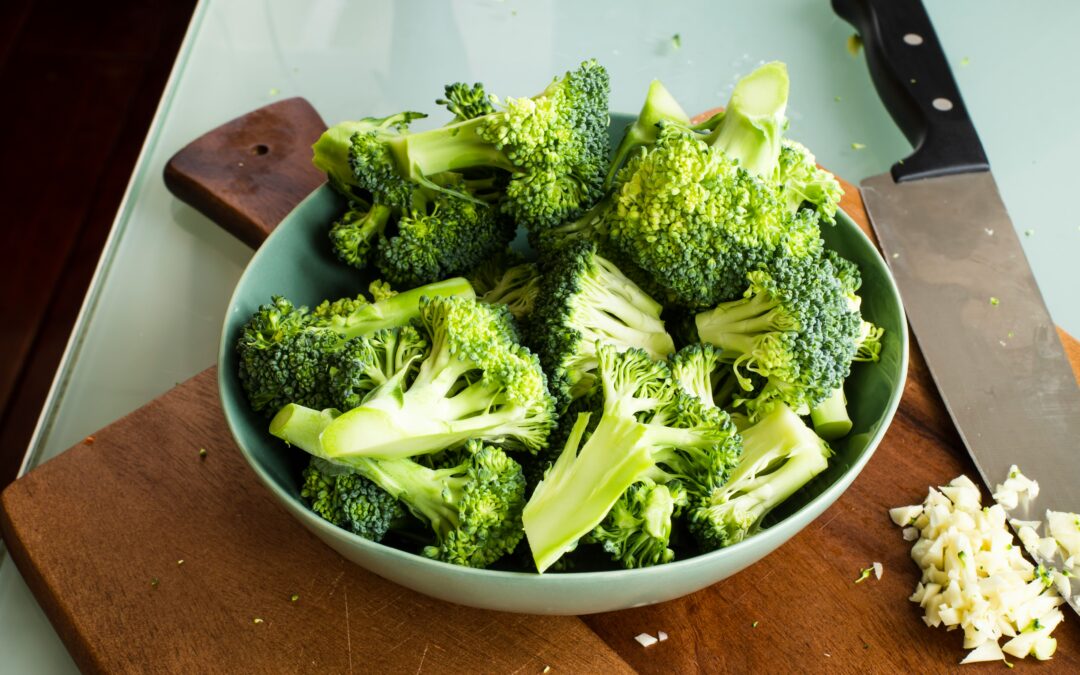
So what is hack and hold? The hack and hold method is a simple culinary technique used to maximize the health benefits of cruciferous vegetables (like broccoli, kale, cauliflower, and cabbage). It involves chopping or crushing the vegetables and letting them sit for about 10 to 40 minutes before you cook them.
This rest period allows an enzyme called myrosinase to mix with precursor compounds in the plant to create sulforaphane. If you cook the vegetables immediately or without chopping them, the heat destroys this enzyme before sulforaphane can form. Once formed, the sulforaphane survives the cooking process. That’s where we get hack and hold which simply means to:
Hack: Chop, dice, or blend your cruciferous vegetables.
Hold: Let them sit on your cutting board or in a bowl for roughly 10–40 minutes.
Cook: Proceed to steam, roast, or boil as normal.
Here’s a neat trick: The Mustard Seed Hack
If you don’t have time to wait, there is a shortcut. Sprinkling 1/2 teaspoon of ground mustard seed powder onto your cooked broccoli, Brussel sprouts, cabbage or cauliflower (see Tip) replaces the heat-damaged myrosinase enzyme, allowing sulforaphane to form in the finished dish.
A Similar Trick for Alliums
And yes, the same hack and hold or “chop and hold” principle applies to the Allium family (such as garlic and onions). Crushing or chopping garlic activates an enzyme that produces allicin, which has anti-inflammatory and antibacterial properties. Letting the crushed garlic sit for about 10 minutes before cooking allows these beneficial properties to fully develop.
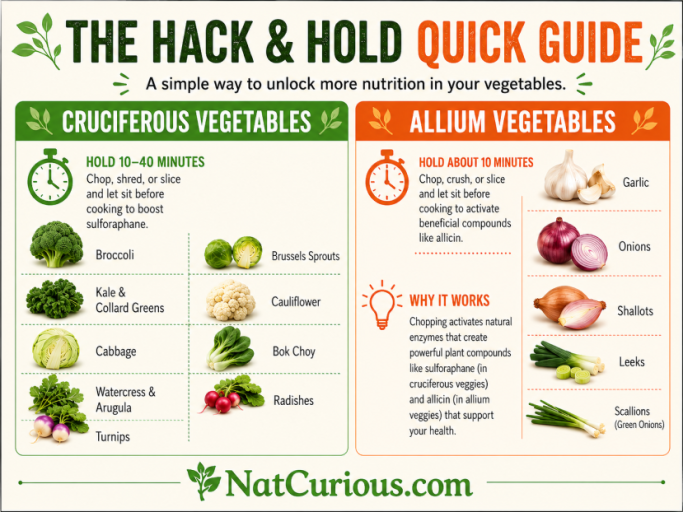
Hack and hold guide
Cruciferous Vegetables (10–40 Minute Hold)
Chopping these veggies activates myrosinase to create cancer-fighting sulfur compounds.
Broccoli: Cut into florets or chop before steaming.
Brussels Sprouts: Shred or halve them before roasting.
Kale & Collard Greens: Chop or tear leaves before sautéing.
Cauliflower: Cut into florets or rice them before steaming.
Cabbage: Shred for slaw or stir-fries.
Bok Choy: Slice the stems and leaves early.
Watercress & Arugula: Best eaten raw, but bruise them slightly if cooking.
Radishes & Turnips: Slice or dice before adding to hot dishes.
Allium Vegetables (10 Minute Hold)
Cutting these veggies activates alliinase to create heart-healthy, antimicrobial compounds.
Garlic: Crush, mince, or chop to release maximum allicin.
Onions: Dice or slice before tossing into the pan.
Shallots: Mince early for sauces and dressings.
Leeks: Chop into rings before sautéing.
Scallions (Green Onions): Slice the white and green parts early.
Does prechopped broccoli from the store have the same benefits as hack and hold?
Yes and no. Pre-chopped store-bought broccoli retains its fiber and vitamins, but it usually yields significantly less sulforaphane compared to the “hack and hold” technique.
Why the “Hack and Hold” Method Works
Okay, here’s a little nerdy but cool food science for you. Sulforaphane does not naturally exist in intact broccoli. Instead, it is formed when two parts of the plant mix: Glucoraphanin: the precursor compound; and Myrosinase: the enzyme that converts the precursor into sulforaphane.
When you chop broccoli yourself, you break the plant’s cell walls, allowing these two elements to meet and create sulforaphane. The “hack and hold” (or chop and stop) method means chopping your fresh broccoli and letting it rest for 30 to 40 minutesbefore cooking. This resting period gives the enzyme enough time to maximize the creation of sulforaphane, which is highly heat-resistant and survives the cooking process.
The Issue with pre-chopped broccoli
Okay, I know many of us buy the time-saving, pre-chopped bags of broccoli. So I was curious: because it is chopped, does it have the same level of sulforaphane? Not really.
Enzyme Loss: When you buy pre-chopped broccoli, you do not know exactly how long ago it was cut or how it was handled. And so pre-chopped broccoli may have already completed its chemical conversion hours or days prior. If left exposed to air too long without being cooked, the sulforaphane degrades.
Nutrient Loss: Beyond sulfuraphane loss, fresh, whole vegetables also lose vitamins and antioxidants as soon as they are cut and exposed to oxygen.
Raw vs. Cooked: If the store-bought pre-chopped broccoli is sold in the refrigerated produce section, it still has some of its enzymes active, but it will not have the same peak sulforaphane yield as fresh chop and hold broccoli.
A Solution for Store-Bought or Frozen Broccoli
If you are using store-bought pre-chopped broccoli, or even store-bought frozen broccoli (which has its enzymes intentionally deactivated by blanching so it doesn’t rot), you can still activate its health benefits using a the mustard seed hack like we did above as a time saver.
Simply add mustard seed powder: Simply sprinkle 1/2 teaspoon of ground mustard seed powder over your cooked broccoli. Mustard seed contains the myrosinase enzyme needed to generate sulforaphane on contact, even in cooked or frozen vegetables. That’s a pretty easy and flavorful fix to bring an important antioxidant back into your food.
Tip: The mustard seed powder hack works very well for broccoli, Brussel sprouts, cabbage and cauliflower, but is not recommended for kale or collard greens where there are different proteins at work and mustard add only a negligible effect.
It is also recommended to use raw ground mustard, or even grind some mustard seeds yourself, to get the best effect. Prepared mustard does not effect the sulforaphane because it has been processed.
Final Thoughts
A little patience at the cutting board can be a simple way to get more from your vegetables!
Keep Learning
For deeper exploration, check out the sources below from peer-reviewed research, trusted health institutions, or other evidence-based articles:
Fahey, J. W., Zhang, Y., & Talalay, P. (1997). Broccoli sprouts: An exceptionally rich source of inducers of enzymes that protect against chemical carcinogens. Proceedings of the National Academy of Sciences, 94(19), 10367–10372. https://www.pnas.org/doi/10.1073/pnas.94.19.10367
Matusheski, N. V., Juvik, J. A., & Jeffery, E. H. (2004). Heating decreases epithiospecifier protein activity and increases sulforaphane formation in broccoli. Phytochemistry, 65(9), 1273–1281. https://pubmed.ncbi.nlm.nih.gov/15184012/
Some of the links on NatCurious.com are affiliate links, which means we may earn a small commission if you choose to make a purchase—at no extra cost to you.
Have you ever noticed that someone else’s stress can make you feel anxious? Or that spending time with optimistic people somehow leaves you feeling lighter and more motivated?
That’s not just your imagination.
One reason this happens is because of something called mirror neurons—brain cells that help us understand and connect with other people. While scientists are still learning exactly how these neurons work in humans, the basic idea offers a fascinating explanation for why emotions, habits, and even behaviors can seem contagious.
Let’s take a closer look at what mirror neurons are and, more importantly, how you can use this knowledge to create a healthier, happier life.
What Are Mirror Neurons?
Mirror neurons are specialized brain cells that become active when you perform an action and when you watch someone else perform that same action. They were first discovered in monkeys during neuroscience research in the 1990s. Researchers found that the same neurons fired when a monkey picked up an object and when it watched another monkey do the exact same thing. Scientists believe humans have a similar “mirror system” that helps us:
Learn by observing others
Recognize emotions
Develop empathy
Understand intentions
Build social connections
Although researchers continue to debate exactly how large a role mirror neurons play in human behavior, there is broad agreement that observation is an incredibly powerful way we learn.
Why This Matters in Everyday Life
You don’t have to be in a neuroscience lab to experience the effects. Think about these common situations:
Someone yawns—and suddenly you yawn.
A coworker’s panic before a deadline makes you feel stressed too.
Watching someone laugh makes you smile.
Spending time with calm, grounded people helps you feel calmer yourself.
Our brains are constantly paying attention to the people around us. In many ways, we’re wired for connection.
Your Environment Shapes Your Mind
The people you spend the most time with influence more than your schedule. They influence:
Your habits
Your outlook
Your confidence
Your motivation
Your stress levels
Even how you talk to yourself
This doesn’t mean you’re powerless. It means your environment matters. If you’re constantly surrounded by negativity, criticism, or chronic stress, your brain may begin treating those emotional states as “normal.” Likewise, spending time with kind, optimistic, emotionally healthy people can gently pull your own mindset in a healthier direction.
Social Media Counts Too
Mirror-like learning doesn’t stop when you leave the house. Your brain also absorbs what you repeatedly watch online. If your social media feed is filled with:
Doom scrolling
Anger
Constant comparison
Fear-based headlines
you may notice yourself feeling more anxious or discouraged.
On the other hand, following creators who teach, encourage, inspire, or make you laugh can leave you feeling energized instead. Your digital environment is part of your mental environment.
How Mirror Neurons Can Help Build Better Habits
One of the most practical lessons from this research is that seeing healthy behaviors makes them easier to adopt.
For example:
Want to exercise more? Spend time around people who enjoy being active.
Working on mindfulness? Join a meditation class or follow a teacher whose calm presence helps you slow down.
Observation often comes before imitation.
Be Careful What You Practice
Mirror systems don’t only learn positive behaviors. We can also absorb:
Complaining
Gossip
Perfectionism
Anxiety
Procrastination
Unhealthy eating habits
This isn’t about blaming other people. It’s about becoming aware of the influences we allow into our daily lives. Awareness gives us choices.
Become Someone Worth Mirroring
Here’s an encouraging thought: Other people are learning from you, too.
Your patience…
Your kindness…
Your willingness to apologize…
Your healthy habits…
Your calm response during stressful moments…
All of these behaviors may quietly encourage the people around you. You never know who is watching. Maybe even your kids.
Simple Ways to Use This Knowledge
You don’t have to overhaul your life overnight. Start small:
Spend more time with encouraging people.
Reduce exposure to constant negativity.
Curate a social media feed that inspires rather than drains you.
Watch people doing the habits you’d like to build.
Practice being the calm, encouraging person others enjoy being around.
Remember that small actions are often contagious.
The Bottom Line
Mirror neurons remind us that humans are deeply social creatures. Whether through our families, friendships, workplaces, communities, or even our phones, we’re constantly learning from one another. While scientists are still uncovering exactly how mirror neurons function in the human brain, one lesson is already clear: The people and experiences you surround yourself with shape your thoughts, emotions, and habits more than you may realize.
Choose those influences wisely—and whenever possible, be the kind of person who helps others become healthier, calmer, and more hopeful.
Keep Learning
For deeper exploration, check out the sources below from peer-reviewed research, trusted health institutions, or other evidence-based articles:
di Pellegrino, G., Fadiga, L., Fogassi, L., Gallese, V., & Rizzolatti, G. (1992). Understanding motor events: A neurophysiological study. Experimental Brain Research, 91(1), 176–180. https://link.springer.com/article/10.1007/BF00230027
Iacoboni, M. (2009). Mirroring People: The Science of Empathy and How We Connect with Others. Farrar, Straus and Giroux. https://amzn.to/4vfUlYc
Keysers, C., & Gazzola, V. (2014). Hebbian learning and predictive mirror neurons for actions, sensations and emotions. Philosophical Transactions of the Royal Society B: Biological Sciences, 369(1644), 20130175. https://royalsocietypublishing.org/doi/10.1098/rstb.2013.0175
Includes 7-Page Worksheet, 10-page Guide, and Bonus 2 Self-Care Tracker pages and a Journal Page. 20 Printable PDF pages - instant download.Available through Kit.com
Includes 7-Page Worksheet, 10-page Guide, and Bonus 2 Self-Care Tracker pages and a Journal Page. 20 Printable PDF pages - instant download.Available through Kit.com