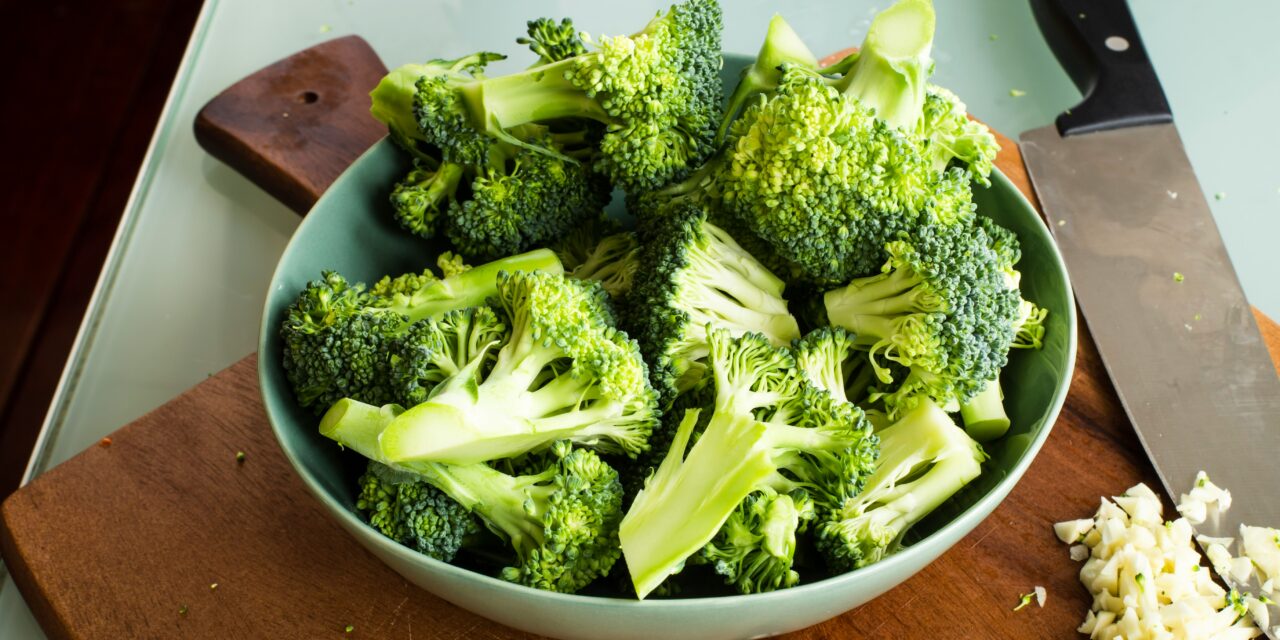
Have you heard of the “Hack and Hold” method to bring out the best nutrition in certain foods?
The “hack and hold” method works on two main plant families: cruciferous vegetables (which produce sulforaphane) and allium vegetables (which produce allicin). I actually thought that “hack and hold” or “chop and hold” only referred to onions and garlic. It turns out that it usually refers to chopping and holding cruciferous vegetables to bring about the creation of sulforaphane, a potent antioxidant and cancer-fighting compound.
So what is hack and hold? The hack and hold method is a simple culinary technique used to maximize the health benefits of cruciferous vegetables (like broccoli, kale, cauliflower, and cabbage). It involves chopping or crushing the vegetables and letting them sit for about 10 to 40 minutes before you cook them.
This rest period allows an enzyme called myrosinase to mix with precursor compounds in the plant to create sulforaphane. If you cook the vegetables immediately or without chopping them, the heat destroys this enzyme before sulforaphane can form. Once formed, the sulforaphane survives the cooking process. That’s where we get hack and hold which simply means to:
- Hack: Chop, dice, or blend your cruciferous vegetables.
- Hold: Let them sit on your cutting board or in a bowl for roughly 10–40 minutes.
- Cook: Proceed to steam, roast, or boil as normal.
Here’s a neat trick: The Mustard Seed Hack
If you don’t have time to wait, there is a shortcut. Sprinkling 1/2 teaspoon of ground mustard seed powder onto your cooked broccoli, Brussel sprouts, cabbage or cauliflower (see Tip) replaces the heat-damaged myrosinase enzyme, allowing sulforaphane to form in the finished dish.
A Similar Trick for Alliums
And yes, the same hack and hold or “chop and hold” principle applies to the Allium family (such as garlic and onions). Crushing or chopping garlic activates an enzyme that produces allicin, which has anti-inflammatory and antibacterial properties. Letting the crushed garlic sit for about 10 minutes before cooking allows these beneficial properties to fully develop.
Hack and hold guide
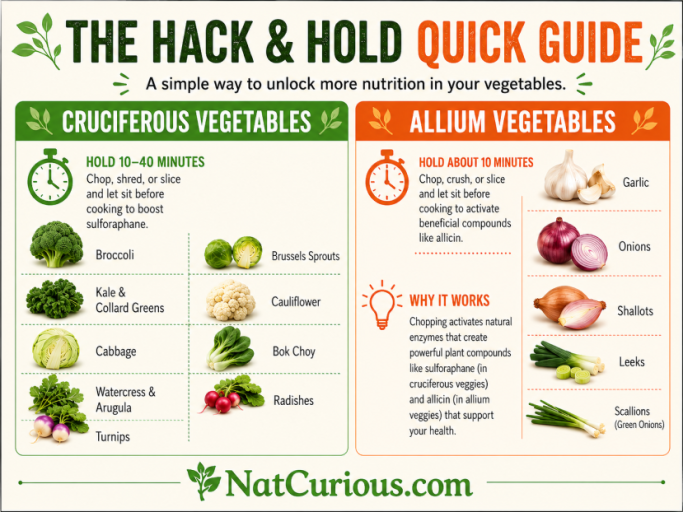
Cruciferous Vegetables (10–40 Minute Hold)
Chopping these veggies activates myrosinase to create cancer-fighting sulfur compounds.
- Broccoli: Cut into florets or chop before steaming.
- Brussels Sprouts: Shred or halve them before roasting.
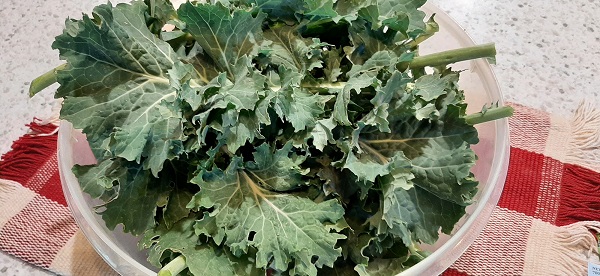
- Kale & Collard Greens: Chop or tear leaves before sautéing.
- Cauliflower: Cut into florets or rice them before steaming.
- Cabbage: Shred for slaw or stir-fries.
- Bok Choy: Slice the stems and leaves early.
- Watercress & Arugula: Best eaten raw, but bruise them slightly if cooking.
- Radishes & Turnips: Slice or dice before adding to hot dishes.
Allium Vegetables (10 Minute Hold)
Cutting these veggies activates alliinase to create heart-healthy, antimicrobial compounds.
- Garlic: Crush, mince, or chop to release maximum allicin.
- Onions: Dice or slice before tossing into the pan.
- Shallots: Mince early for sauces and dressings.
- Leeks: Chop into rings before sautéing.
- Scallions (Green Onions): Slice the white and green parts early.
Does prechopped broccoli from the store have the same benefits as hack and hold?
Yes and no. Pre-chopped store-bought broccoli retains its fiber and vitamins, but it usually yields significantly less sulforaphane compared to the “hack and hold” technique.
Why the “Hack and Hold” Method Works
Okay, here’s a little nerdy but cool food science for you. Sulforaphane does not naturally exist in intact broccoli. Instead, it is formed when two parts of the plant mix: Glucoraphanin: the precursor compound; and Myrosinase: the enzyme that converts the precursor into sulforaphane.
When you chop broccoli yourself, you break the plant’s cell walls, allowing these two elements to meet and create sulforaphane. The “hack and hold” (or chop and stop) method means chopping your fresh broccoli and letting it rest for 30 to 40 minutes before cooking. This resting period gives the enzyme enough time to maximize the creation of sulforaphane, which is highly heat-resistant and survives the cooking process.
The Issue with pre-chopped broccoli
Okay, I know many of us buy the time-saving, pre-chopped bags of broccoli. So I was curious: because it is chopped, does it have the same level of sulforaphane? Not really.
- Enzyme Loss: When you buy pre-chopped broccoli, you do not know exactly how long ago it was cut or how it was handled. And so pre-chopped broccoli may have already completed its chemical conversion hours or days prior. If left exposed to air too long without being cooked, the sulforaphane degrades.
- Nutrient Loss: Beyond sulfuraphane loss, fresh, whole vegetables also lose vitamins and antioxidants as soon as they are cut and exposed to oxygen.
- Raw vs. Cooked: If the store-bought pre-chopped broccoli is sold in the refrigerated produce section, it still has some of its enzymes active, but it will not have the same peak sulforaphane yield as fresh chop and hold broccoli.
A Solution for Store-Bought or Frozen Broccoli
If you are using store-bought pre-chopped broccoli, or even store-bought frozen broccoli (which has its enzymes intentionally deactivated by blanching so it doesn’t rot), you can still activate its health benefits using a the mustard seed hack like we did above as a time saver.
Simply add mustard seed powder: Simply sprinkle 1/2 teaspoon of ground mustard seed powder over your cooked broccoli. Mustard seed contains the myrosinase enzyme needed to generate sulforaphane on contact, even in cooked or frozen vegetables. That’s a pretty easy and flavorful fix to bring an important antioxidant back into your food.
Tip: The mustard seed powder hack works very well for broccoli, Brussel sprouts, cabbage and cauliflower, but is not recommended for kale or collard greens where there are different proteins at work and mustard add only a negligible effect.
It is also recommended to use raw ground mustard, or even grind some mustard seeds yourself, to get the best effect. Prepared mustard does not effect the sulforaphane because it has been processed.

Final Thoughts
A little patience at the cutting board can be a simple way to get more from your vegetables!
Keep Learning
For deeper exploration, check out the sources below from peer-reviewed research, trusted health institutions, or other evidence-based articles:
Fahey, J. W., Zhang, Y., & Talalay, P. (1997). Broccoli sprouts: An exceptionally rich source of inducers of enzymes that protect against chemical carcinogens. Proceedings of the National Academy of Sciences, 94(19), 10367–10372.
https://www.pnas.org/doi/10.1073/pnas.94.19.10367
Matusheski, N. V., Juvik, J. A., & Jeffery, E. H. (2004). Heating decreases epithiospecifier protein activity and increases sulforaphane formation in broccoli. Phytochemistry, 65(9), 1273–1281.
https://pubmed.ncbi.nlm.nih.gov/15184012/
National Center for Complementary and Integrative Health. Garlic: What You Need To Know.
https://www.nccih.nih.gov/health/garlic
Shop This Post
Upgrade your kitchen with these eco-friendly cutting boards!
2-Piece Reversible Cutting Board Set Made with Natural Wheat Straw Fiber
Astercook Deep-Carbonized Bamboo Cutting Boards for Kitchen with Wood Storage Stand, Reversible
Grab a bit of Mustard Seed Powder! A staple in my pantry!
Simply Organic, Mustard Ground Organic This organic ground mustard is perfect for any dish.
Spice Profile Whole Organic Yellow Mustard Seeds | Lab Tested Whole mustard seeds for those who like to grind their own!