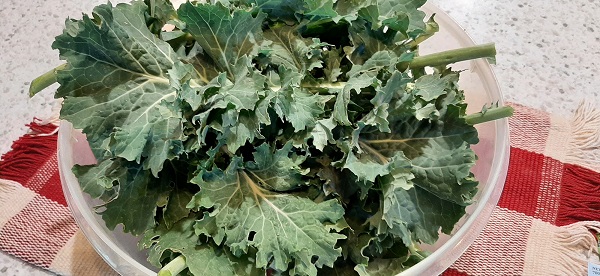
Kale, along with cabbage, collards, and brussels sprouts, is a member of the the Brassica family, has become symbolic of healthy eating, and it’s for good reason – kale packs a punch.
We have a short season out here in the Pacific Northwest. Figuring out when to get started in the garden can be a challenge and sometimes just plain guesswork. It’s not unusual to have a late frost in early June. But luckily, kale can be started even with a cool spring. That’s why nutritious kale can make a great choice for early planting in cooler regions.
(Tip: Use the interactive USDA Plant Hardiness Zone Map to plug in your zip code and find the plant hardiness zone for your location.)
Planting Kale
When to plant:
- Kale prefers cooler temperatures, so they make great plants to start in the spring or late summer or early fall.
- Like collards a light frost can “sweeten” the leaves.
How to plant:
- Plant seeds as soon as the soil can be worked in early spring.
- Kale likes to be planted in a sunny location in moderately moist soil during cooler weather.
- Plant seeds 6 inches apart in rows 18 to 24 inches apart.
- Cover with 1/8 in of fine soil, well pressed down.
- These plants should germinate in 1 to 2 weeks, depending upon the weather and the soil warmth.
- Thin plantings to 18 to 24 inches apart in rows 2 – 3 feet apart. (Kale will be less buggy if they have a little room around them.)
- Keep soil moderately moist during germination.
- Harvest outer leaves when plant is established, about 3 – 5 inches length. Depending on the variety of kale, this will take about 30 to 50 days after planting.
- (Tip:) You can start kale seeds inside 4-6 weeks before your last frost date. Plant 1-2 seeds per starter cup, 1/4 inch deep in good seed-starting mix or compost.
- Plant kale again in late July through August for fall and winter crops.
Buying Kale
When buying kale, buy organic kale whenever possible. According to the Environmental Working Group (EWG), “Leafy greens’ popularity as health foods rich in vitamins and antioxidants has soared in recent years. At the same time, the amount and type of pesticide residues on kale and other greens has expanded significantly.” Unfortunately, leafy greens like kale are widely contaminated with DCPA, a pesticide which the EPA classified as a possible carcinogen in 1995.
Look for sturdy, fresh leaves with no wilting or discoloration. You can buy in bunches or chopped bagged kale. Chopped kale may have stem pieces included, whereas you can remove stems (which tend to be chewy) from fresh bunches or kale.
How to Use Kale
Kale is great in smoothie or simply sautéed in avocado oil and garlic, and perhaps some shallots as well. When sautéing, it’s good to pull the leaves from the stems since the stems tend to be chewy. If you are using kale for smoothie, you can leave the thinner stems on if you like. The blender will do most of the “chewing” for you.
And here’s a great idea from Hartford Healthcare Senior Services:
Kale quinoa bowl: Mix sautéed kale with quinoa, roasted veggies and your favorite protein, then drizzle with tahini or dressing.
Why Kale Is Considered a “Superfood”
According to studies from PubMed Central – National Institutes of Health, from a scientific perspective, kale earns this label because it combines:
- High micronutrient density
- Broad-spectrum phytonutrients
- Low calorie load
- Bioactive compounds with disease-preventive potential
Peer-reviewed literature explicitly highlights kale as rich in:
“vitamins… minerals… glucosinolates, polyphenols, carotenoids, flavonoids, and chlorophylls”
Vitamins and Minerals in Kale
Core nutritional profile (per ~1 cup raw, ~21 g)
- Calories: ~7–8
- Fiber: ~1 g
- Protein: ~0.6 g
Key micronutrients (% Daily Value)
- Vitamin K: ~68% DV
- Vitamin C: ~22% DV
- Vitamin A: ~6% DV
- Manganese: ~8% DV
- Smaller amounts: folate, B6, calcium, potassium, magnesium, iron
Kale is considered nutrient-dense because it delivers high micronutrients with very low calories.
Kale is exceptionally rich in:
- Vitamins: K, C, A, B-complex
- Minerals: calcium, potassium, iron, magnesium
- Phytonutrients: glucosinolates, carotenoids, flavonoids, polyphenols
What makes kale unique is not just its vitamin content—but its complex phytochemical profile, especially sulforaphane-producing glucosinolates, which are strongly linked to health benefits in research.

Final Thoughts
The bottom line is kale is an excellent choice that’s fairly easy to grow in colder climates and late season gardens. Even if you are not a gardener, grab a bunch on your next visit to a farmer’s market or produce section of your store to reap the benefits of this superfood.
Keep Learning
For deeper exploration, check out the sources below from peer-reviewed research, trusted health institutions, or other evidence-based articles:
Gunnars, K. (2025, April 15). 9 health benefits of kale. Healthline.
https://www.healthline.com/nutrition/10-proven-benefits-of-kale
Watson, S. (n.d.). Kale: Health benefits, nutrition, and tips. Medical News Today.
https://www.medicalnewstoday.com/articles/270435
NutritionValue.org. (n.d.). Kale, raw – nutritional value.
https://www.nutritionvalue.org/Kale%2C_raw_nutritional_value.html
Šamec, D., Urlić, B., & Salopek-Sondi, B. (2020). Kale (Brassica oleracea var. acephala) as a superfood: Review of the scientific evidence. Cogent Food & Agriculture, 6(1), 1811048.
https://doi.org/10.1080/23311932.2020.1811048
Nutritional and health-promoting properties of kale: A review. (2025). PubMed Central (PMC).
https://pmc.ncbi.nlm.nih.gov/articles/PMC12610807/
Hartford HealthCare Senior Services. (n.d.). Newsroom article.
https://hhcseniorservices.org/health-wellness/news/newsroom-detail?articleId=62165&publicid=395