How to Hit Your Daily Magnesium Target with Food
Check out the recipe for a High Protein Power Oat Bowl below.
Quick Takeaway
- Aim for 310–420 mg/day total
- Prioritize food sources first
- Use supplements only if needed
I’ve been a user of supplements for a while. I think they’ve helped me in many ways when I had some issues that required a little bit more nutrition. There are some nutrients that I continue to take just because I find that they’re hard to get in food or I’ve had difficulty finding them in food. But as I study foods and nutrition in regards to wellness, I’ve slowly started to wean off of supplements and try and find my nutrients in the foods that I eat.
Today I realized that I had run out of my magnesium supplement. I thought to myself, “What foods do I have available where I can actually get my nutritional needs met through real food?” So I went on a mission to do some research on that and this is what I found out.
First of all, how much magnesium do I really need on a daily basis? So I asked the question: How much magnesium do I need every day?
It turns out the amount of magnesium you need each day depends mostly on age and sex assigned at birth. Here are the standard recommendations from the National Institutes of Health:
- Women 19+: ~320 mg/day
- Pregnancy: 350 – 360 mg/day
- Men 19+: ~400 mg/day
So why is magnesium so important?
Magnesium is involved in more than 300 biochemical reactions in the body and is essential for energy production, muscle and nerve function, blood sugar regulation, and bone health.
- Helps convert food into usable cellular energy (ATP)
- Supports proper muscle contraction and relaxation
- Plays an important role in nerve signaling and nervous system function
- Helps maintain a healthy heart rhythm and supports blood vessel function
- Contributes to strong bones and healthy calcium metabolism
- Supports healthy blood sugar regulation and insulin function
- Promotes relaxation and may help support better sleep quality
- Necessary for protein synthesis, DNA production, and cell repair
- Helps support healthy blood pressure and circulation
- Plays a role in healthy brain and neurological function
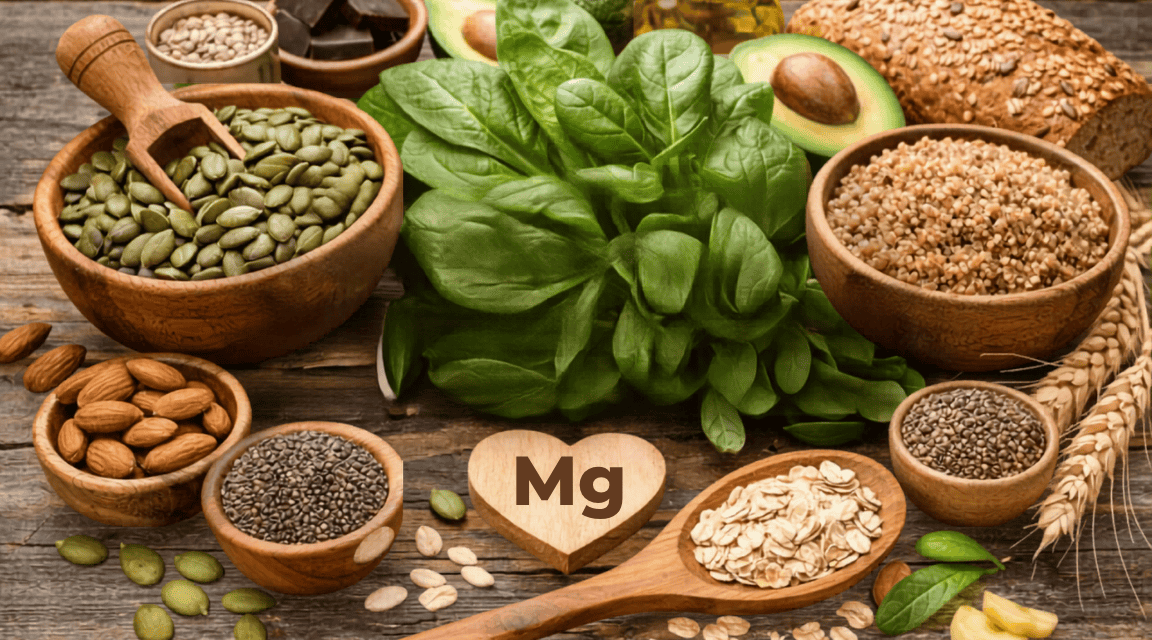
The best discovery of the day was that I could reach my magnesium requirements with some of the foods that I already love! Foods like:
- pumpkin seeds (~150 mg per ounce)
- Spinach (~150 mg per cooked cup)
- dark chocolate (~65 mg per ounce per 1 ounce serving)
- Legumes, like chickpeas (~40-80 mg per ½ cup serving)
- Add in some whole grains like a cup of brown rice (~ 80 mg per cup), and you can easily hit daily targets for magnesium.
How you can add magnesium to your meals:
Here’s an example of meals that can help you have a magnesium-rich day:
Breakfast
- Oatmeal (1 cup cooked) → 60 mg
- Pumpkin seeds (1 oz, 3 tablespoons) → ~ 150 – 190 mg
Subtotal: 210 mg
Lunch
- Spinach salad (1 cup cooked spinach) → 150 mg
- Chickpeas (½ cup) → 40 mg
Subtotal: 190 mg
Running total: 400 mg
Snack
- Dark chocolate (70–85% cacao dark chocolate)
one large square (1 oz) or roughly 1/4 of a standard 4 oz bar) → 65 mg
Running total: 465 mg
Dinner
- Salmon (3 oz) → 25 mg
- Brown rice (1 cup cooked) → 85 mg
Daily total: 575 mg
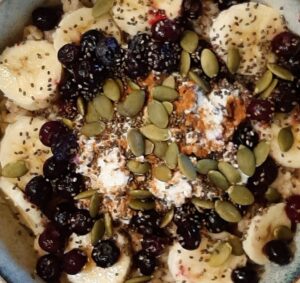
Here’s an easy breakfast idea that is high magnesium AND high protein.
Base
- 1 cup cooked oats (use rolled oats or steel-cut)
- ~6g protein | ~60 mg magnesium
Protein Boost
- ½–1 cup cottage cheese
- +13–28g protein
- 1 tbsp chia seeds
- +2g protein | +40 mg magnesium
- Optional: 1 scoop protein powder (if you want it very high protein)
- +15–25g protein
Magnesium Boosters
- 2 tbsp pumpkin seeds
- ~150 mg magnesium
- 1 tbsp almond butter
- ~45 mg magnesium
Smart Carbs + Fiber
- ½ cup blueberries
- OR sliced banana for creaminess + potassium
Flavor + Functional Add-Ins
- Cinnamon (blood sugar balance)
- Vanilla extract
- Pinch of sea salt (enhances flavor)
Estimated Nutrition (without protein powder)
- Protein: ~22–35g
- Magnesium: ~250–300 mg
- Fiber: ~10–15g
(That’s a big chunk of your daily magnesium needs in one meal.)
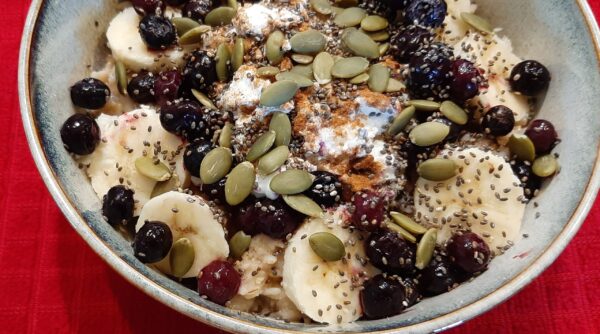
High Magnesium + High Protein Power Oat Bowl
Ingredients
- 1 cup cooked oats rolled or steel-cut
- ½ –1 cup cottage cheese
- 2 tbsp pumpkin seeds pepitas
- 1 tbsp chia seeds
- 1 tbsp almond butter
- ½ cup blueberries or ½ banana, sliced
- ½ tsp cinnamon
- ½ tsp vanilla extract optional
- Pinch sea salt
- 1 scoop whey protein powder optional
- OR
- 1 scoop vegan protein powder optional
Instructions
- Cook oats according to package directions or reheat precooked oats in a pan on the stovetop or in a microwave if short on time.
- Once cooked, stir in cinnamon, vanilla, and a pinch of salt.
- Let oats cool slightly, then fold in almond butter and then cottage cheese or simply spoon on top.
- Add blueberries and/or banana — any fruit will do really.
- Top with pumpkin seeds, chia seeds.
- Mix gently and enjoy warm.
Recipe Notes
- Stir cottage cheese in after cooking for a creamy, almost cheesecake-like texture
- Toast pumpkin seeds lightly → better flavor + crunch
- If you want it sweeter without sugar: mash banana into the oats while cooking
- Want it savory? Skip fruit, add egg + greens + everything bagel seasoning

Final Thoughts: It really is easy to get a good amount of magnesium from food
By incorporating a few simple foods every day, even chocolate, you can help your body get the magnesium it needs to function as it’s best. Choose whole grain, greens, legumes and nuts to help you reach that goal. Hey, and if chocolate is a part of that (let’s go sugar-free folks!), I’m in.
Keep Learning
For deeper exploration, check out the sources below from peer-reviewed research, trusted health institutions, or other evidence-based articles:
- National Institutes of Health. Magnesium – Consumer Fact Sheet. https://ods.od.nih.gov/factsheets/Magnesium-Consumer/
- National Institutes of Health. Magnesium – Health Professional Fact Sheet. https://ods.od.nih.gov/factsheets/Magnesium-HealthProfessional/
- National Center for Biotechnology Information. Magnesium in Health and Disease (StatPearls). https://www.ncbi.nlm.nih.gov/books/NBK519036/
- Cleveland Clinic. Magnesium Deficiency: Symptoms, Causes & Treatment. https://my.clevelandclinic.org/health/diseases/23264-magnesium-deficiency
- Harvard T.H. Chan School of Public Health. Magnesium. https://nutritionsource.hsph.harvard.edu/magnesium/