

When Overwhelm Starts Taking Over
A friend stopped by today to drop off some farm-fresh eggs on her way to an appointment. We chatted for a few minutes, but she soon realized she was running late. She had discovered that her appointment was actually an hour earlier than she thought.
As we talked about gardening, she shared her frustration that she wasn’t nearly as far along with her gardening plans as she had hoped to be. Then she sighed and said, “I’m just so overwhelmed.”
I suggested that maybe she could hire someone to help with some of the heavier garden tasks, like pulling weeds, so she could focus on the parts she enjoys—planting, watering, and watching things grow.
When someone starts feeling overwhelmed, it’s often a sign that it’s time to ask for help.
I know because I’ve been there.
Years ago, I was a divorced mother raising two children who were far apart in age and involved in completely different activities. I worked a demanding full-time job, maintained a relationship, and had no nearby family support. Everyone else lived on the opposite side of the country. Of course, there was the shopping and cooking, the cleaning and getting kids where they needed to be on time.
I volunteered for school committees, organized Cub Scout activities, kept score at little league games, helped with soccer tasks like snack duty and trophy ordering, and made late-night runs for a poster board the evening before a school project was due. It felt like there was always one more responsibility waiting for me.
At the time, I thought that was simply what adults did. We handled everything.
And for a while, I did.
Then life started adding more weight than I could carry.
Layoffs began happening at work. Employees who were losing their jobs came to me daily for advice and support. Watching people grieve the loss of their livelihoods was emotionally exhausting, as was knowing there was really nothing I could do to save their jobs.
At the same time, one of my children entered the teenage years. My ex-husband was creating conflict around holiday schedules, and my partner was frustrated with how much I bent over backward trying to keep everyone happy. I found myself trapped in the middle of competing demands, constantly trying to smooth things over. Then I received word that my younger brother had suddenly died at 40, on his sailboat — on Father’s Day.
I was running on empty and grieving.
Then a few month’s later came the final straw.
The city launched a major sewer reconstruction project directly outside my home. Overnight, construction crews arrived with bulldozers, drills, and heavy equipment. The noise continued day and night for over a year.
I called city offices. I sent emails. I explained that the constant noise was making it impossible to sleep.
Everyone was polite.
Nothing changed.
Eventually, my nervous system simply couldn’t keep up anymore.
Small problems felt enormous. Minor schedule changes could bring me to tears. Unexpected visitors felt overwhelming. I found myself reacting to things that I would have handled easily just a few years earlier. I would never wish that experience on anyone.
In the end, I had to leave my job and spend time healing.
But I suspect many people are standing where I once stood—right on the edge of burnout, doing their best to hold everything together while quietly wondering how much longer they can keep going.
If that’s you, here are some things to try before overwhelm becomes something bigger.
14 Ways to Reduce Overwhelm Before It Gets Too Big
1. Ask for Help
Whether it’s a friend, family member, therapist, coach, neighbor, or paid professional, let someone help carry the load. You do not have to do everything yourself.
2. Learn to Say No
Every “yes” costs time, energy, and attention. Protect those resources carefully.
3. Do a Brain Dump
Write down everything that’s swirling around in your head. Getting tasks onto paper can instantly reduce mental clutter.
4. Identify the Next Tiny Step
When a project feels overwhelming, stop focusing on the whole thing. Ask yourself, “What’s the next smallest action I can take?”
5. Lower the Bar Temporarily
This is not the season for perfection. Sometimes “good enough” is exactly what you need.
6. Build White Space Into Your Calendar
Leave unscheduled time between commitments. Constant back-to-back obligations create stress even when they’re enjoyable. Use this time to meditate, soak in the bath, or simply do nothing at all.
7. Delegate Something
Pick one task this week that someone else can do. It doesn’t have to be forever.
8. Reduce Incoming Information
Turn off notifications, step away from the news, or take a break from social media. Your brain needs room to recover.
9. Get Outside
Even ten minutes in nature can help calm a stressed nervous system and provide a sense of perspective.
10. Prioritize Sleep
Everything feels harder when you’re exhausted. Protect sleep as if it’s one of the most important appointments on your calendar.
11. Eat and Hydrate Regularly
When we’re overwhelmed, basic self-care is often the first thing to disappear. Yet it’s the foundation that helps us cope.
12. Stop Multitasking
Focus on one thing at a time. Constantly switching tasks increases mental fatigue and makes overwhelm worse.
13. Create a “Not Right Now” List
Some tasks don’t need to be done immediately. Give yourself permission to postpone nonessential projects.
14. Pay Attention to the Warning Signs
Irritability, forgetfulness, constant fatigue, difficulty concentrating, frequent tears, and feeling emotionally numb can all be signs that you’re approaching burnout. Don’t ignore them.

Final Thoughts
Overwhelm rarely arrives all at once. It usually builds quietly, one responsibility, one commitment, and one stressful, sad, or hard situation at a time.
The earlier you notice it, the easier it is to make changes.
You don’t have to wait until everything falls apart before you start taking care of yourself. I know now that there were a few things I could have done to ease my stress and overwhelm, including booking a hotel for a few nights to catch up on sleep or allowing myself to grieve sooner than I did.
Your nervous system has a “stuck setting” — and there’s a free 2-minute quiz from Neurotoned that tells you yours. It’s the most accurate thing I’ve found for explaining why you’re exhausted no matter how much you sleep: Try the quiz!

Sometimes the bravest thing you can do is admit that you’re carrying too much and begin setting some of it down.
Shop This Post
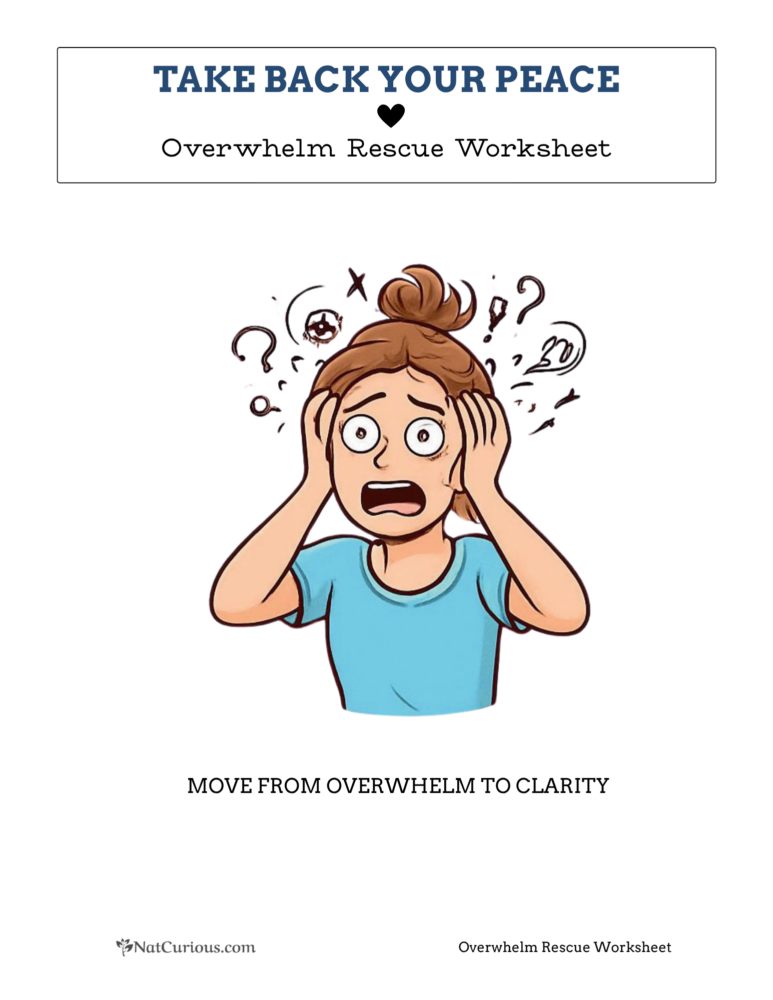
Includes 7-Page Worksheet, 10-page Guide, and Bonus 2 Self-Care Tracker pages and a Journal Page. 20 Printable PDF pages – instant download. Available through Kit.com